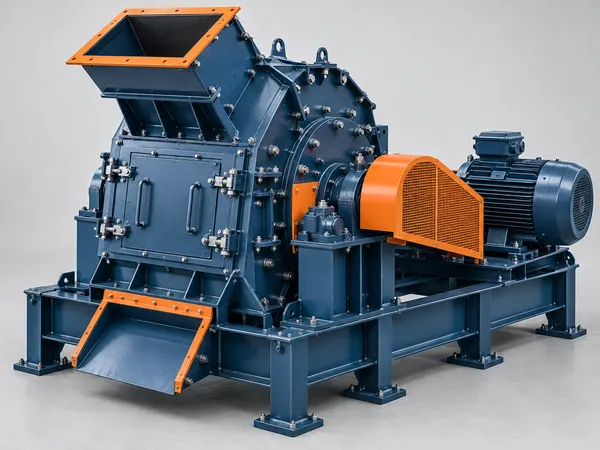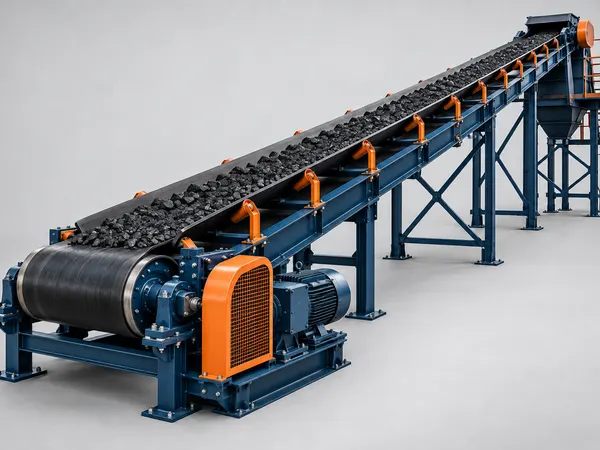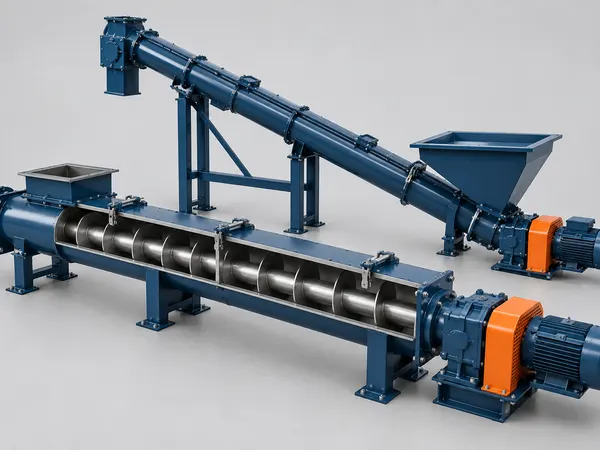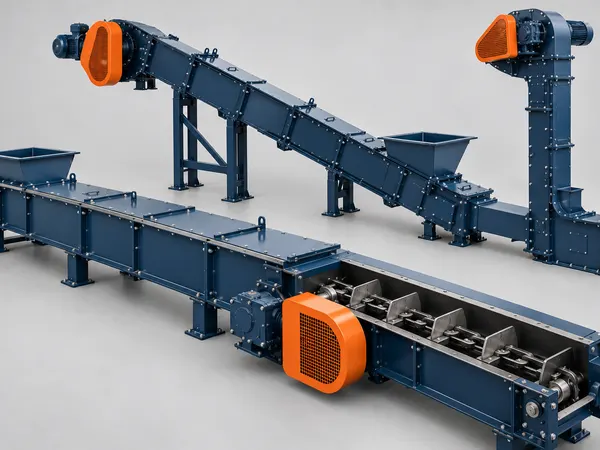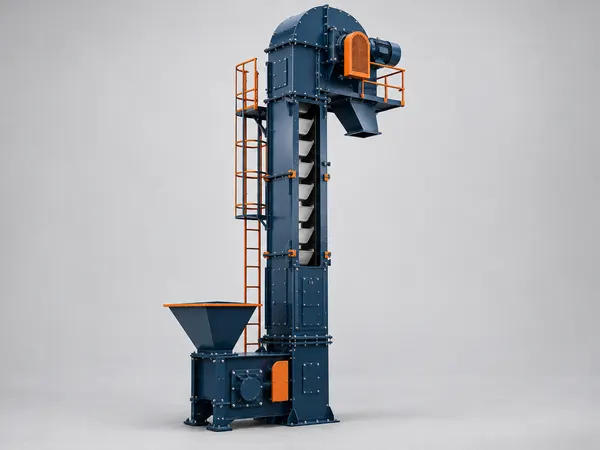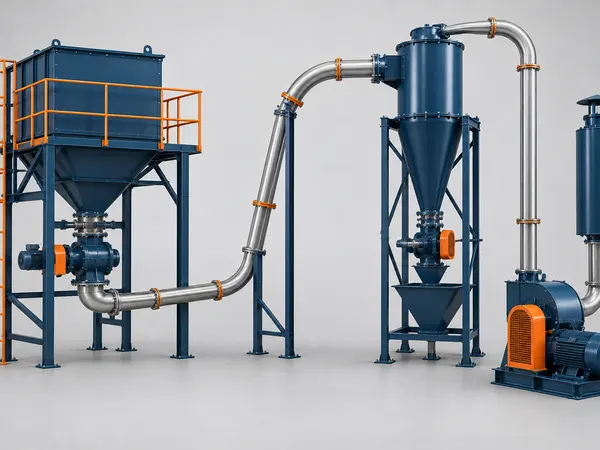
Images are representative illustrations. Products are custom-engineered to your requirement and actual appearance may vary.
Vibrating Screen & Vibrating Feeder
We engineer and supply Vibrating Screen & Vibrating Feeder as part of complete industrial heating and utility solutions. Share your capacity, fuel type, application, and site details — our team will recommend a suitable configuration and quote.
Buy Vibrating Screen & Vibrating Feeder
Built to order and quoted against your duty, so there is no list price. Tell us the capacity, fuel and application by phone or email — we reply within 24 hours.
About Vibrating Screen & Vibrating Feeder
A vibrating screen separates solid fuel by size before it reaches the crusher or the boiler. Fuel falls onto a vibrating deck of perforated plate or wire mesh: what is small enough passes through, and oversize lumps travel across the deck and off the end. A vibrating feeder uses the same motion without the screen, drawing fuel out of a hopper at a steady, adjustable rate so that everything downstream receives an even flow.
Screening matters because boilers are particular about fuel size. A grate-fired boiler burns poorly on a fuel with too many fines, which fall through the grate or are carried out unburnt, while a fluidized bed boiler needs coal crushed to a much smaller, controlled size. Screening ahead of the crusher sends only the oversize through it, which cuts the load on the crusher and avoids grinding fuel that was already the right size into fines.
A grizzly or scalping screen does the rough first cut, taking out boulders, tramp material and oversize lumps before they reach finer equipment. Biomass needs its own care: long pieces of wood, stones and string mixed into the fuel jam feeders and screws, and a screen is the cheapest place to catch them.
We design and supply vibrating screens, grizzly screens and vibrating feeders as part of complete fuel handling systems, sized to the fuel, its moisture and the flow rate the boiler needs.
A screen is sized by area rather than by throughput alone. How much material a square meter of deck can classify depends on the cut size, on how much of the feed is near that size, on the moisture, and on the slope and stroke of the deck. Material close to the aperture is the difficult part: it neither falls through readily nor travels off cleanly, and a feed full of near-size particles needs far more deck than the same tonnage of easily separated material.
Moisture is what defeats screens in Indian conditions. Damp fines stick together and to the wire, blinding the apertures until the deck is passing nothing and everything reports as oversize. Where the fuel is wet or has a large fines fraction, the answer is a deck that keeps itself clear — rubber or polyurethane panels that flex, larger apertures and, where warranted, a ball-tray deck — rather than more vibration.
The feed arrangement decides whether a screen achieves its rating. Material has to arrive spread across the full width of the deck at a steady rate, travelling in the direction the deck runs. Dumped onto the center from a chute it uses a fraction of the available area, which is exactly the duty a vibrating feeder ahead of the screen is there to fix — it draws from the hopper at a controlled rate and lays material across the width.
Typical duty is screening coal ahead of the crusher in a captive power house, taking fines out before grate firing, and catching stones, wire and oversize wood before they reach a feeder. We supply screens and feeders on their own or as part of a coal or biomass handling system, with erection, commissioning, deck and wear spares and an AMC where the plant wants one.
Vibrating Screen & Vibrating Feeder Key Features
- Single and multi-deck vibrating screens
- Grizzly / scalping screens for oversize and tramp removal
- Vibrating feeders for steady, adjustable hopper draw-off
- Perforated plate or wire mesh decks matched to the cut size
- Unbalanced-motor or electromagnetic vibration drives
- Screens ahead of crushers to bypass fuel already in size
- Dust enclosures and flexible connections at transfer points
- Replaceable decks and wear liners
- Screening area sized on cut size, near-size fraction and moisture
- Rubber or polyurethane deck panels where damp fines would blind wire
- Deck slope and stroke set to the material
- Feeder ahead of the screen to spread material across the full width
- Spring or rubber mountings to keep vibration out of the structure
- Bypass chute so the plant can run while a deck is changed
- Guarded drives and accessible deck fixings for quick panel changes
Vibrating Screen & Vibrating Feeder Specification
Materials Handled
Screening & Feeding Types
A vibrating deck separates fuel by size, passing fines through and carrying oversize off the end for crushing or rejection.
Heavy bars or plate make the first rough cut, removing boulders, tramp material and large lumps ahead of finer equipment.
Unbalanced motors vibrate a tray to draw fuel from a hopper; feed rate is set by the vibration and the hopper gate.
An electromagnetic drive gives finely adjustable, instantly responsive feed rate control for metered duty.
Two or more decks in one frame make several size cuts at once — oversize to the crusher, product to the boiler, fines to a separate bin.
Vibrating Screen & Vibrating Feeder Applications
Industries Served
Advantages of a Vibrating Screen & Vibrating Feeder
Removing fines and oversize gives the boiler the fuel size it was designed to burn.
Only oversize is sent to the crusher, so it wears less and makes fewer fines.
Tramp material and stones are caught before they jam feeders, screws and conveyors.
A vibrating feeder draws fuel from a hopper at a steady, adjustable rate.
Deck type and aperture are chosen for fuel as it arrives in the monsoon, so the screen keeps classifying instead of blinding over.
A vibrating screen is a frame, a deck and a drive — there is little to go wrong, and the deck is designed to be changed quickly.
Fuel of a consistent size burns more evenly across a grate, with less carried out unburnt and less falling through as fines.
Optional Accessories
Frequently Asked Questions(10)
What is a vibrating screen used for in a boiler plant?
What is the difference between a vibrating screen and a vibrating feeder?
Why screen fuel before crushing it?
What is a grizzly screen?
Why does a screen stop passing material in the monsoon?
How much screening area do we need?
Does the feed arrangement really matter?
Can a screen and feeder be added to an existing fuel handling plant?
What are the wearing parts?
Do you supply the screen with the chutes and structure?
- Capacity / size requirements
- Process or application details
- Material preference (M.S / S.S where applicable)
- Installation location & delivery timeline
Share your capacity, fuel type, and application — we respond within 24 hours.
After it is installed
Equipment is the start of the relationship, not the end of it. We work from Indore, Madhya Pradesh, for plants across India, and handle installation and commissioning, boiler AMC, retrofits, plant audits, spare parts and operator training — on equipment from any manufacturer, not only our own.
Related products
View more