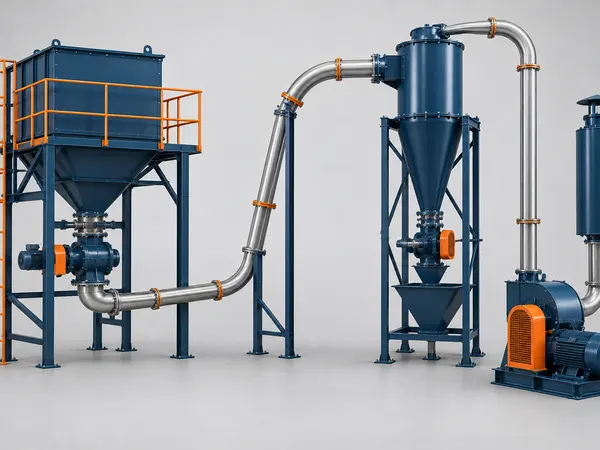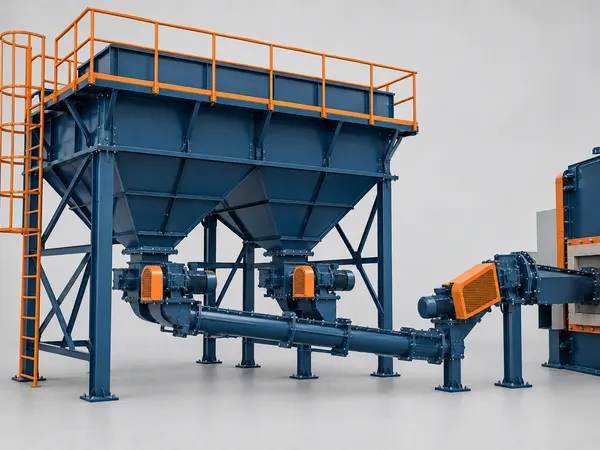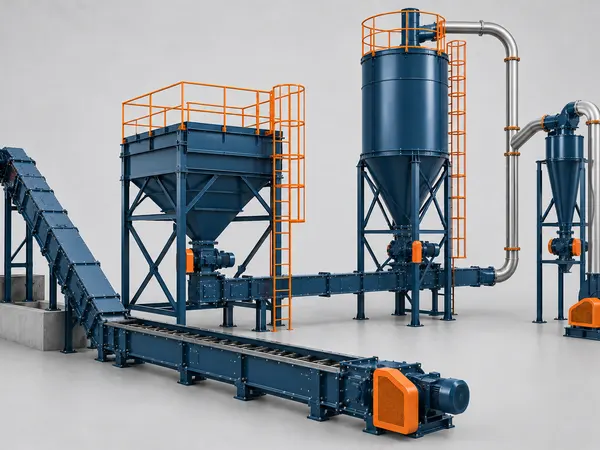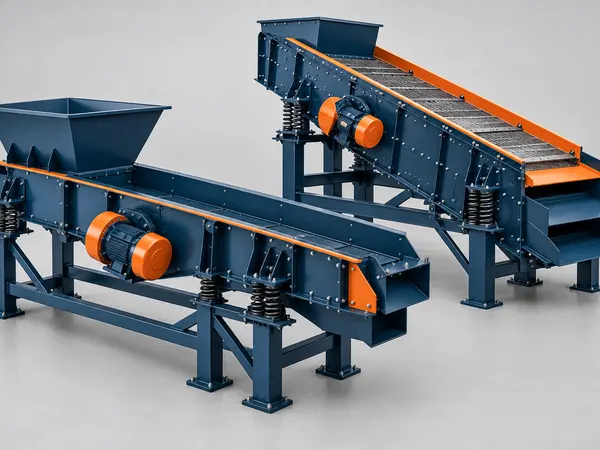
Images are representative illustrations. Products are custom-engineered to your requirement and actual appearance may vary.
Bucket Elevator
We engineer and supply Bucket Elevator as part of complete industrial heating and utility solutions. Share your capacity, fuel type, application, and site details — our team will recommend a suitable configuration and quote.
Buy Bucket Elevator
Built to order and quoted against your duty, so there is no list price. Tell us the capacity, fuel and application by phone or email — we reply within 24 hours.
About Bucket Elevator
A bucket elevator lifts bulk material vertically in buckets fixed to a belt or chain running inside an enclosed casing. Where a belt conveyor would need a long, gently sloping run to gain height, a bucket elevator does it in the footprint of the casing — which is why it is the usual way to lift fuel from ground level into an overhead boiler bunker or silo.
Two discharge methods cover most duties. A centrifugal-discharge elevator runs faster and throws material out of the buckets at the head as they turn over the pulley; it suits free-flowing fuel such as crushed coal and husk. A continuous-discharge elevator runs slower with closely spaced buckets, so each bucket's load slides onto the back of the one ahead; it suits light, fluffy or fragile material that a fast elevator would throw back down the casing.
Biomass needs particular care. Its low bulk density means a biomass elevator must be sized on volume, with larger or more closely spaced buckets, and wet, sticky fuel can hang up in the buckets and the boot. The design of the inlet, the boot and the discharge chute decides whether an elevator runs clean or chokes.
We design and fabricate belt and chain bucket elevators for boiler fuel and ash, with inspection doors, anti-runback protection and access platforms included rather than added later.
Capacity is a matter of volume rather than weight: bucket size, bucket spacing and belt or chain speed set how much material passes the head each minute, and the fill factor — how full a bucket actually runs — depends on how the fuel behaves at the boot. A dense, free-flowing material fills buckets readily; light biomass does not, and an elevator sized on tonnage alone will be short of capacity the day it is commissioned.
The boot is where most elevators are won or lost. Fuel should be fed into the up-going side so the buckets scoop cleanly; fed into the down-going side, the buckets dig through the accumulated load and both power and wear rise sharply. Wet, sticky fuel that will not leave the bucket at the head comes back down and builds in the boot, which is why the boot is given a clean-out door, a properly sized inlet and, where the fuel warrants it, a shape that will not hold material.
Because a bucket elevator is a loaded vertical lift, its protection matters more than on a horizontal conveyor. A holdback stops the loaded leg running backwards when power fails; belt slip, misalignment and zero-speed sensing stop it before a slipping belt polishes the pulley or a misaligned belt cuts into the casing. Where fine, dry dust is being lifted, the casing is treated as a dust-handling enclosure, with attention to ignition sources and to venting.
Typical duty is lifting husk or crushed coal into an overhead bunker in a rice mill or process boiler house, filling a day bin above a feeder, and elevating fly ash into a storage silo. We supply bucket elevators as part of a complete fuel handling chain with conveyors, screens and bunkers, or as a single replacement unit into an existing casing line — with erection, commissioning, spares and an AMC where the plant wants one.
Bucket Elevator Key Features
- Enclosed casing for dust-free vertical lifting
- Belt or chain elevator selected for the material
- Centrifugal or continuous discharge to suit the fuel
- Buckets sized on volume for light biomass
- Boot designed to limit hang-up of wet fuel
- Anti-runback holdback and zero-speed protection
- Inspection doors and access platforms
- Small footprint for lifting into bunkers and silos
- Capacity set on bucket volume and fill factor, not tonnage alone
- Inlet arranged so buckets load on the up-going side
- Boot with clean-out door and no material-holding corners
- Belt slip, misalignment and zero-speed protection
- Screw or gravity take-up to hold belt or chain tension
- Bolted head and boot sections for erection in a tight boiler house
- Dust-tight casing joints throughout the lift
Bucket Elevator Specification
Materials Handled
Bucket Elevator Types
Buckets bolted to a belt — smooth and quiet, suited to free-flowing, moderately abrasive fuel.
Buckets on chain — robust for heavier, hotter or more abrasive material and larger lumps.
Faster running; material is thrown out of the buckets at the head. Suits free-flowing coal and husk.
Slower, closely spaced buckets discharge onto the one ahead. Suits light, fluffy or fragile material.
Both the up and down legs carry buckets in separate casings, used where the duty needs the highest capacity in a fixed footprint.
Bucket Elevator Applications
Industries Served
Advantages of a Bucket Elevator
Lifts fuel vertically where an inclined belt would need a long run and a large area.
The casing contains dust and keeps the fuel dry on its way up.
Discharge type, bucket size and spacing are chosen for the material, including light biomass.
Holdback devices stop the loaded leg running backwards if power is lost.
Buckets and spacing are worked out from how light biomass actually fills a bucket, so the elevator makes its rated capacity on the real fuel.
Loading on the up-going side, a clean-out door and a boot shaped not to hold material prevent the build-up that makes elevators heavy and noisy.
Inspection doors, bolted sections and access platforms mean buckets, belt and bearings can be worked on without dismantling the leg.
Optional Accessories
Frequently Asked Questions(10)
What is a bucket elevator used for in a boiler plant?
What is the difference between centrifugal and continuous discharge?
Can a bucket elevator handle biomass?
Belt or chain bucket elevator?
What do you need to size a bucket elevator?
Why does an elevator get noisy and draw more power over time?
What stops a loaded elevator running backwards during a power cut?
Can an elevator be installed inside an existing boiler house?
What spares and maintenance does it need?
Can you supply the elevator with the rest of the fuel handling system?
- Capacity / size requirements
- Process or application details
- Material preference (M.S / S.S where applicable)
- Installation location & delivery timeline
Share your capacity, fuel type, and application — we respond within 24 hours.
After it is installed
Equipment is the start of the relationship, not the end of it. We work from Indore, Madhya Pradesh, for plants across India, and handle installation and commissioning, boiler AMC, retrofits, plant audits, spare parts and operator training — on equipment from any manufacturer, not only our own.
Related products
View more