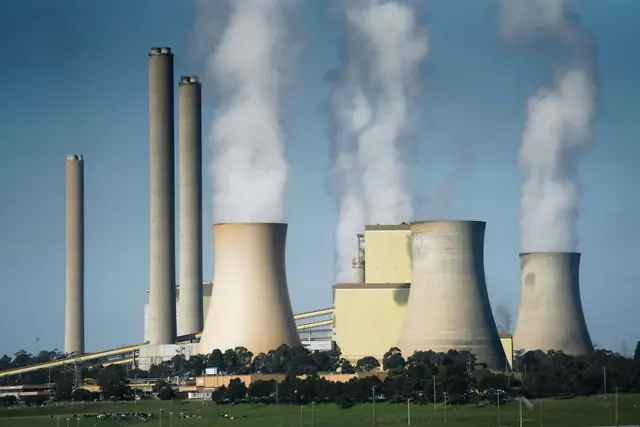
Complete emission control solutions including electrostatic precipitators, bag filters, cyclones, and wet scrubbers to meet PCB norms.
Product Range
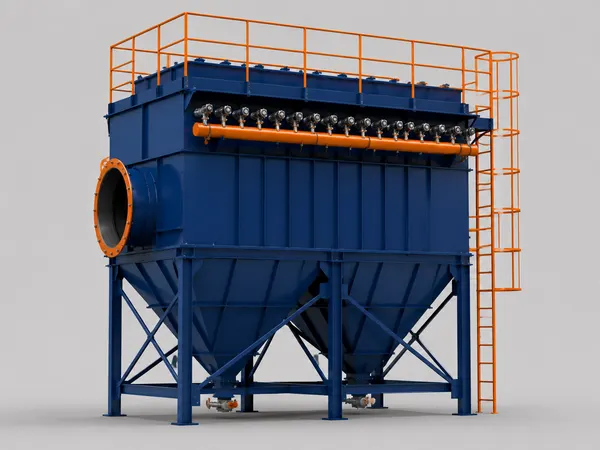
Fabric Filters / Bag Filters (Baghouses)
High efficiency fabric/bag filters (baghouses) for industrial dust collection — pulse-jet or reverse-air cleaning, high particulate removal efficiency for boiler and process exhaust.
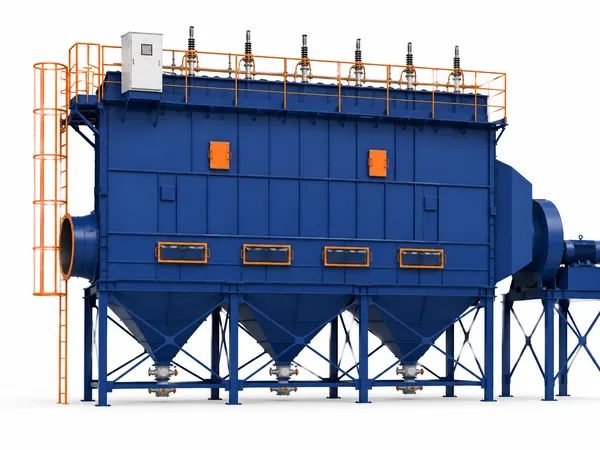
Electrostatic Precipitators (ESPs)
High efficiency electrostatic precipitators for large-volume gas cleaning — low pressure drop, high particulate removal efficiency for boiler, kiln, and process exhaust applications.
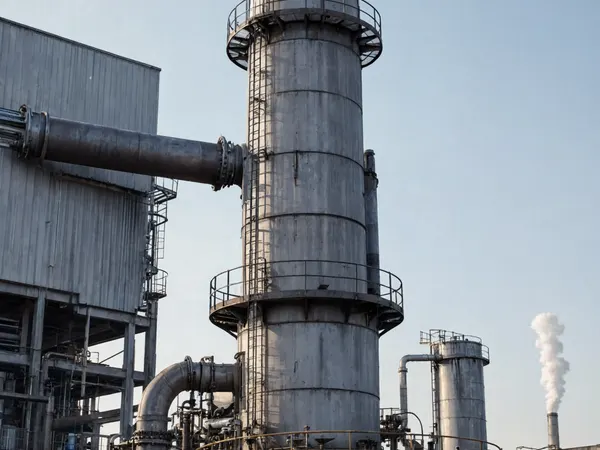
Wet Scrubbers
High efficiency wet scrubbers for particulate and gaseous emission control — venturi, packed bed, and spray tower configurations for dust, SOx, and acid gas removal.
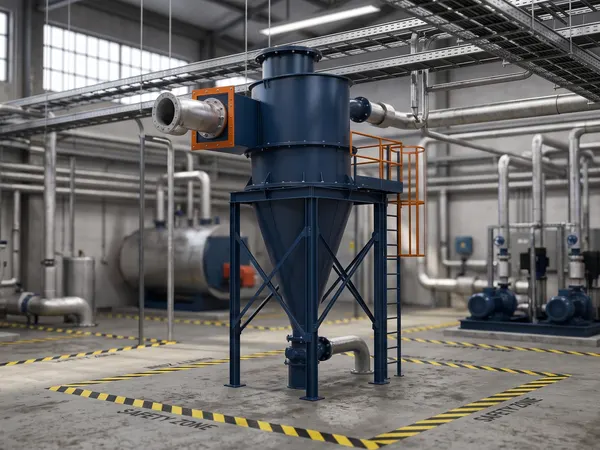
Cyclone Separators
High efficiency cyclone separators for coarse particulate removal — economical first-stage dust collection for boiler, dryer, and process exhaust applications.
Air pollution control equipment exists to take particulate and gaseous pollutants out of an exhaust stream before it reaches the stack. Which technology does that job is decided by the dust — its particle size distribution, its loading, whether it is sticky, abrasive or explosive — and by the gas it arrives in: temperature, moisture, and whether acid dew point is a factor.
Cyclone separators use nothing but the gas's own momentum. Dust-laden gas is spun in a conical body and the heavier particles are thrown to the wall and drop out. With no filter media and no moving parts, a cyclone is the cheapest and most robust device available, and it handles high temperature and abrasive dust that would destroy a fabric filter. It is inefficient on fine particles, which is why it is most often specified as a pre-cleaner ahead of a bag filter or ESP rather than as the final stage.
Fabric bag filters — baghouses — pass the gas through woven or felted media and collect dust as a cake on the surface. Efficiency on fine particulate is very high, and pulse jet cleaning keeps the media clear without taking the unit offline. The constraints are gas temperature, which the media must survive, and moisture, which blinds the fabric. Media selection against gas chemistry is the decision that determines bag life.
Electrostatic precipitators charge the particles and collect them on earthed plates, then rap the plates to dislodge the dust. Pressure drop is very low, so fan power is a fraction of a baghouse of the same duty, and they handle high gas volumes and high temperatures well. The trade-off is dust resistivity: fly ash from some fuels collects readily, while dust outside the workable resistivity band does not, and no amount of field strength fixes that.
Wet scrubbers take a different approach again, contacting the gas with a liquid to capture particulate and absorb soluble gases at the same time. They are the answer where the stream carries both dust and an acid gas, or where the dust is explosive and a dry collector would be a hazard. The cost is a liquid effluent that then has to be treated — one problem exchanged for a smaller one.
Most plants end up with a train rather than a single device: a cyclone knocking out the coarse fraction, a bag filter or ESP as the primary collector, and a scrubber where gaseous pollutants have to be dealt with. Tell us the gas volume, temperature, dust loading and composition, and the emission limit you have to meet, and we will specify the train rather than a box.
Based in Indore, we are dust collector manufacturers in Madhya Pradesh, supplying bag filters, cyclones, electrostatic precipitators and wet scrubbers to plants across India.
Frequently Asked Questions
Do you supply air pollution control systems in Madhya Pradesh?
Which air pollution control equipment do I need to meet PCB norms?
What is the difference between an ESP, a bag filter and a cyclone?
Can you retrofit emission control to an existing boiler?
Interested in Air Pollution Control Systems?
Share your requirement — capacity, fuel type, and application — and our team will get back with a detailed quote.