
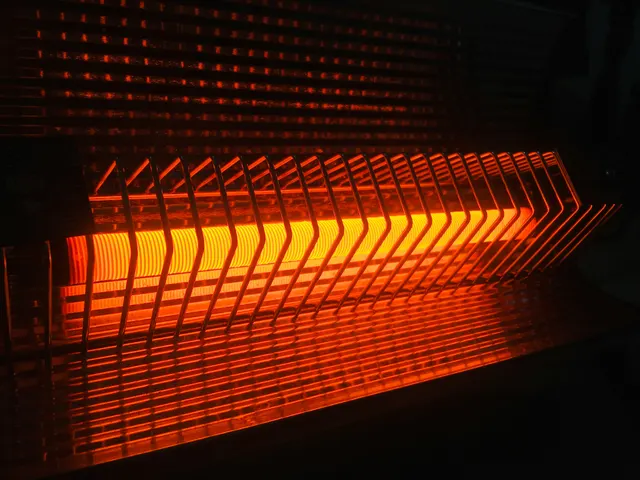
Shell & tube, plate & frame, double pipe and finned tube heat exchangers for process heating, cooling and heat recovery duty across temperature and pressure ranges.
Product Range
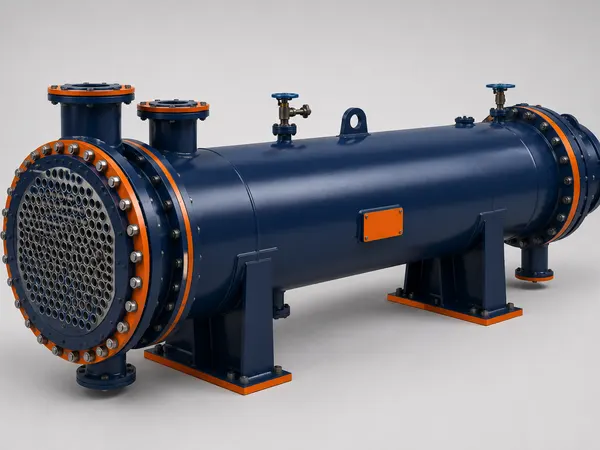
Shell & Tube Heat Exchanger
Tube bundle inside a cylindrical shell for high pressure and high temperature duty — robust, fouling-tolerant, and mechanically cleanable.
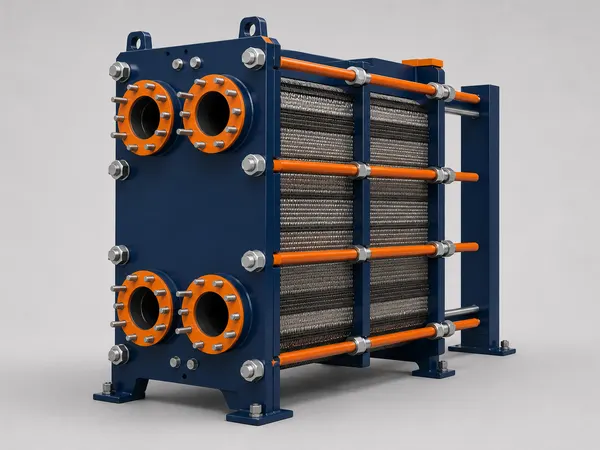
Plate & Frame Heat Exchanger
Gasketed corrugated plate pack for high heat transfer in a compact footprint — close temperature approach and expandable surface area.
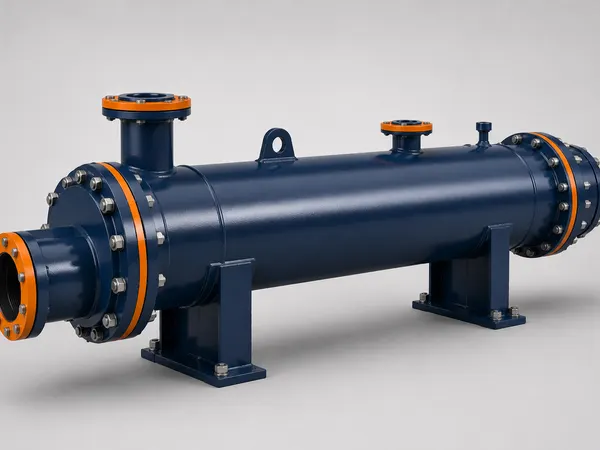
Double Pipe Heat Exchanger
Pipe-within-a-pipe hairpin arrangement giving true counter-current flow — for small duties, high pressures and close temperature approaches.
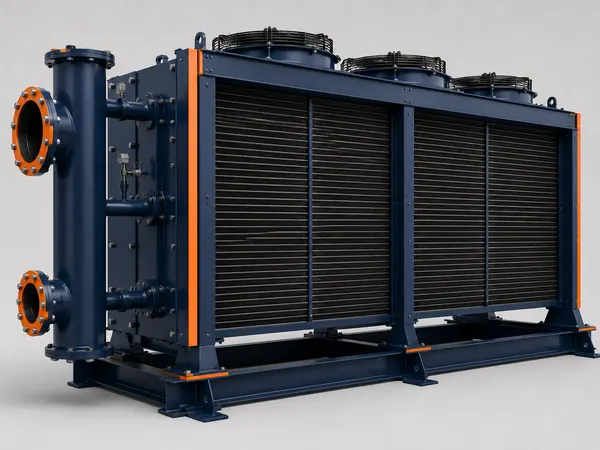
Finned Tube Heat Exchanger
Extended-surface tubes for air and gas side duty — air-cooled condensers, economizers, air preheaters and flue gas heat recovery.
A heat exchanger transfers heat between two fluids without mixing them. Every process plant runs several, and the choice between types is not a matter of preference — it is decided by pressure, temperature, how much surface area the duty needs, how dirty the fluids are, and whether the unit will ever have to be opened and cleaned.
Shell and tube is the default for high pressure and high temperature. A bundle of tubes inside a cylindrical shell carries one fluid while the other flows around them, and because the geometry is simple and the shell is a straightforward pressure vessel, it handles conditions the other types cannot. It is bulky for the duty it performs, but it tolerates fouling, thermal shock and pressure that would destroy a gasketed plate pack.
Plate and frame inverts that trade-off. Corrugated plates clamped in a frame create narrow, highly turbulent channels, giving three to five times the heat transfer coefficient of a shell and tube unit in a fraction of the volume. Close temperature approaches become practical, and adding plates increases duty without replacing the unit. The limits are the gaskets: pressure and temperature ceilings are lower, and fluids carrying fibers or large particles will block the channels.
Double pipe is the simplest arrangement — one pipe inside another, true counter-current flow, and almost nothing to go wrong. It suits small duties, high-pressure service and applications where a very close temperature approach matters more than compactness. Scaling it up means adding hairpins, and beyond a modest surface area a shell and tube unit becomes the cheaper answer.
Finned tube exists for a different problem: one of the two fluids is air or gas, which transfers heat far worse than a liquid. Fins multiply the surface on the gas side to compensate. This is what makes air-cooled condensers, economizers, air preheaters and flue gas heat recovery possible, and it is the type most often specified where cooling water is scarce or expensive.
As a heat exchangers supplier we get asked which type is best; the question is rarely that. It is which constraint binds first — pressure, space, fouling, approach temperature, or the availability of cooling water. Tell us the two fluids, their flow rates, inlet and outlet temperatures, and design pressure, and we will size the exchanger and tell you which type the duty actually calls for.
Industrial heat exchangers all do one job — move heat between two fluids without mixing them — and the four types on this page differ only in how they trade pressure capability against compactness and cleanability. Shell and tube takes the hardest conditions and can be opened; plate and frame is compact and efficient but gasket-limited; double pipe suits small high-pressure duties; finned tube handles gas on one side, where the transfer coefficient is poor and surface area has to compensate.
We are based in Indore. As a heat exchanger manufacturer in Madhya Pradesh that proximity matters for the one thing this equipment reliably needs: a shell and tube bundle has to come out to be cleaned, and getting it to a workshop and back without a week of freight is worth more than a small difference in first cost. It is also why we would rather size the unit for the fouling you actually have than the fouling the datasheet assumes.
A note on scope, because the terms overlap. What we build is process equipment. Where a plant contract includes a commercial heat exchanger duty — process cooling water, a heat exchanger HVAC interface serving the plant’s own air handling, or hot water for site services — that is supplied as part of the package. Standalone building services work is not something we take on, and a supplier who says otherwise is bidding for work they will subcontract.
Interested in Heat Exchangers?
Share your requirement — capacity, fuel type, and application — and our team will get back with a detailed quote.