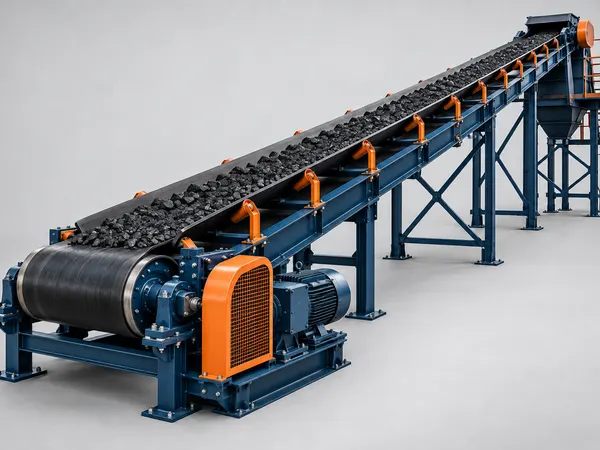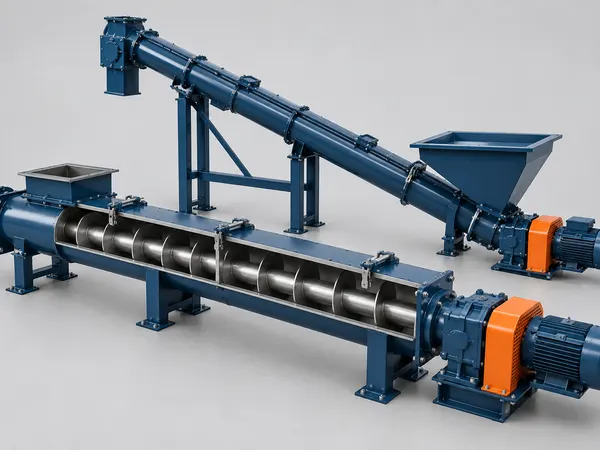
Images are representative illustrations. Products are custom-engineered to your requirement and actual appearance may vary.
Rice Husk & Biomass Pneumatic Conveying System
We engineer and supply Rice Husk & Biomass Pneumatic Conveying System as part of complete industrial heating and utility solutions. Share your capacity, fuel type, application, and site details — our team will recommend a suitable configuration and quote.
Buy Rice Husk & Biomass Pneumatic Conveying System
Built to order and quoted against your duty, so there is no list price. Tell us the capacity, fuel and application by phone or email — we reply within 24 hours.
About Rice Husk & Biomass Pneumatic Conveying System
A pneumatic conveying system moves light bulk material through a closed pipeline in a stream of air. For rice husk, sawdust and similar light biomass it is often the simplest way to carry fuel from storage to the boiler: the pipeline can follow almost any route — up walls, across roofs, around other plant — and there is no open transfer point for dust to escape or rain to get in.
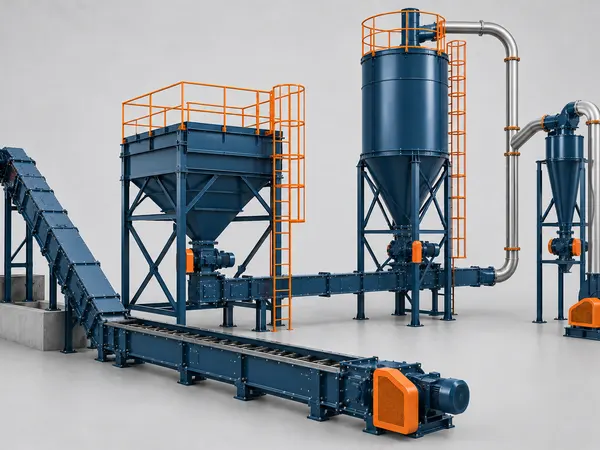
Most fuel systems are dilute phase. A blower drives air through the pipeline at high velocity, fuel is metered into it through a rotary airlock feeder, and at the receiving end a cyclone separates the fuel from the air and drops it into the boiler hopper. Dense-phase systems move material more slowly as plugs in the pipe and suit more abrasive or fragile material, at a higher equipment cost.
Rice husk is abrasive because of its high silica content, and in a pipeline the wear concentrates on the bends. Long-radius bends, wear-resistant bend liners and a sensible air velocity decide how long a husk system runs between repairs. Pneumatic conveying also uses more power per tonne than a mechanical conveyor, so it earns its place on awkward routes and light materials rather than on heavy fuel over straight runs.
We design and supply pneumatic conveying systems for rice husk and biomass boiler feeding, and for fly ash, with the blower, rotary airlocks, pipeline, cyclone and controls engineered as one system.
Air velocity is the whole design. Below the velocity at which the material stays in suspension it drops out and settles along the bottom of the pipe, and a pipeline that has started to settle will go on collecting material until it plugs. Well above it, the extra velocity buys nothing and is paid for in wear at the bends, in broken-up fuel and in blower power. The working velocity is chosen with margin over the point where material would drop out, and then the pipe diameter is set to hold it along the whole route.
Systems are built either as pressure or as vacuum. A pressure system blows from one pickup point to one or several destinations and is the usual arrangement for feeding boilers from a store. A vacuum system draws from several pickup points to one destination, which suits collecting sawdust or husk from a number of machines or hoppers. Both can be combined, and the choice decides where the blower, the airlock and the filter sit.
The conveying air has to be dealt with at the far end. A cyclone drops most of the material into the receiving hopper, and the air leaving it still carries fines, so it is vented through a filter rather than into the boiler house. A rotary airlock under the cyclone keeps the seal while letting material out; if that airlock leaks, the system loses air, the cyclone loses efficiency and dust appears where it should not.
Typical duty is husk from a mill store to the boiler hopper, sawdust and shavings from woodworking machinery to a fuel bin, and fly ash from collector hoppers to a silo. We design and supply the whole system — blower, airlocks, pipeline, bends, cyclone, filter and controls — as new plant or as a retrofit onto an existing store and boiler, with erection, commissioning, wear spares and an AMC where the plant wants one.
Rice Husk & Biomass Pneumatic Conveying System Key Features
- Closed pipeline with flexible routing
- Dilute-phase and dense-phase systems
- Rotary airlock feeder for metered pickup
- Cyclone separator at the receiving hopper
- Long-radius, wear-resistant bends for abrasive husk
- Blower and air velocity matched to the material
- Dust-free transfer with no open chutes
- Suits fly ash conveying to silos
- Conveying velocity set with margin over the settling point
- Pressure or vacuum systems, or a combination of both
- Vent filter so conveying air leaves clean
- Diverter valves to feed more than one destination
- Airlocks with adjustable tip clearance to limit air loss
- Pipe routed with long-radius bends and minimum direction changes
- Blower silencer and filter on the air inlet
Rice Husk & Biomass Pneumatic Conveying System Specification
Materials Handled
Conveying Technology
High-velocity air carries material in suspension through the pipeline — simple and economical for light fuel such as rice husk.
Material moves slowly as plugs at lower air velocity, reducing wear and degradation for abrasive or fragile material.
A rotary valve meters material into the pipeline while holding the air pressure, and seals hoppers and cyclones.
At the receiving end a cyclone separates fuel from the conveying air and drops it into the boiler hopper.
A blower draws air through the line so material can be picked up at several points and delivered to one — the usual arrangement for collecting sawdust and husk from scattered hoppers.
Rice Husk & Biomass Pneumatic Conveying System Applications
Industries Served
Advantages of a Rice Husk & Biomass Pneumatic Conveying System
A pipeline follows walls, roofs and existing plant where a belt or chain conveyor could not go.
Fuel travels in a closed pipe, so dust stays in and rain stays out.
Long-radius, lined bends and controlled velocity extend life on abrasive rice husk.
Blower, airlocks, pipeline and cyclone are sized together rather than bought separately.
The pipeline runs overhead and up walls, leaving the boiler house floor clear where a mechanical conveyor would occupy it.
Vacuum pickup from a number of hoppers, or diverter valves feeding more than one boiler, without a second conveying system.
Everything that rotates sits at the two ends — the blower and the airlocks — so the length of the route adds little to what has to be maintained.
Optional Accessories
Frequently Asked Questions(10)
How does a rice husk pneumatic conveying system work?
What is the difference between dilute-phase and dense-phase conveying?
Why do pneumatic conveying bends wear out?
Is pneumatic conveying better than a mechanical conveyor?
What causes a conveying line to block?
Where does the conveying air go at the boiler end?
Pressure or vacuum — which suits our plant?
How much power does pneumatic conveying use?
What wears out, and what should we stock?
Can a pneumatic system be added to an existing boiler and store?
- Capacity / size requirements
- Process or application details
- Material preference (M.S / S.S where applicable)
- Installation location & delivery timeline
Share your capacity, fuel type, and application — we respond within 24 hours.
After it is installed
Equipment is the start of the relationship, not the end of it. We work from Indore, Madhya Pradesh, for plants across India, and handle installation and commissioning, boiler AMC, retrofits, plant audits, spare parts and operator training — on equipment from any manufacturer, not only our own.
Related products
View more