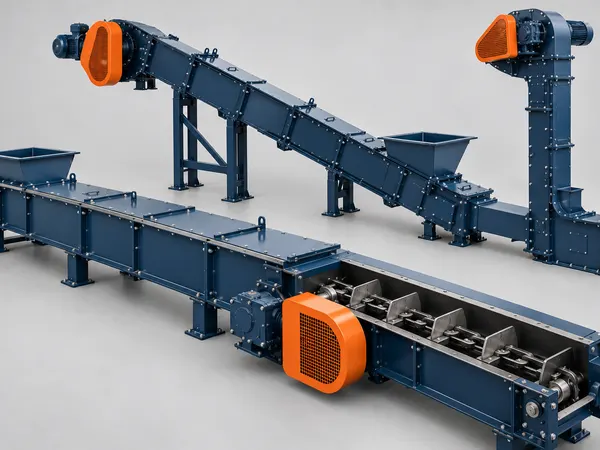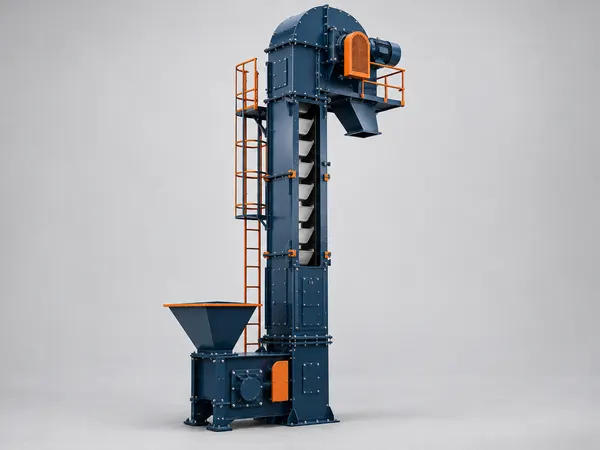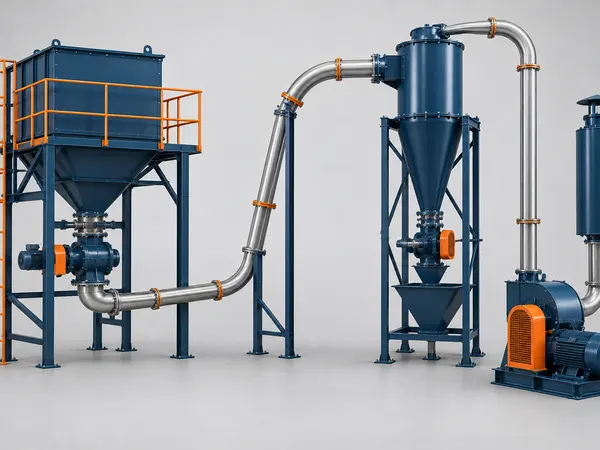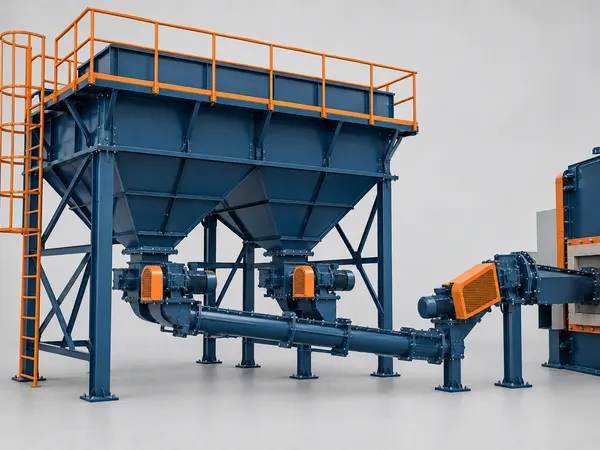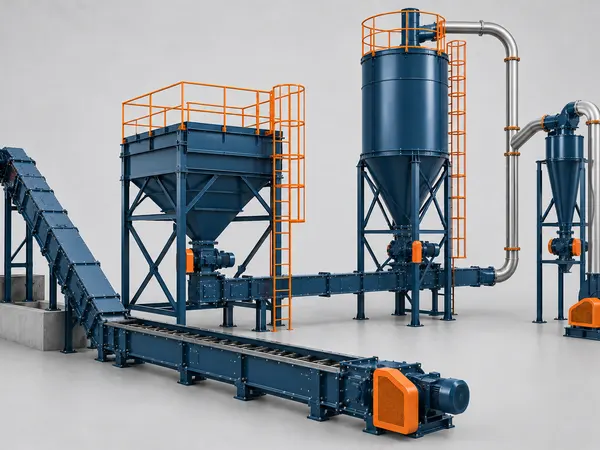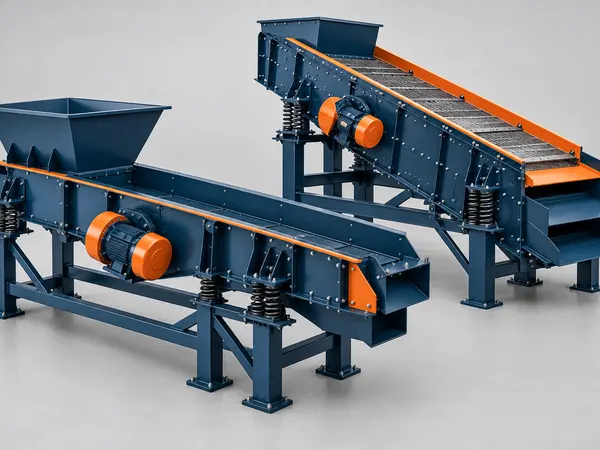
Images are representative illustrations. Products are custom-engineered to your requirement and actual appearance may vary.
Screw Conveyor & Screw Feeder
We engineer and supply Screw Conveyor & Screw Feeder as part of complete industrial heating and utility solutions. Share your capacity, fuel type, application, and site details — our team will recommend a suitable configuration and quote.
Buy Screw Conveyor & Screw Feeder
Built to order and quoted against your duty, so there is no list price. Tell us the capacity, fuel and application by phone or email — we reply within 24 hours.
About Screw Conveyor & Screw Feeder
A screw conveyor moves material with a rotating helical flight inside a trough or tube. It is compact, fully enclosed and easy to meter, which makes it the usual choice for short transfers and for feeding fuel into a boiler at a controlled rate. As a screw feeder, turned by a variable-speed drive, it doses rice husk, sawdust, wood chips or crushed coal straight into the furnace in step with the boiler's load.
Enclosure is a large part of its appeal. A screw keeps dust in and rain out, can be sealed at both ends, and can run at an incline where a short belt would need a cover and transfer chutes. The trade-off is capacity and power: screws suit shorter runs, and capacity falls as the incline rises.
Biomass is where screw design matters most. Stringy or fibrous fuel can wind itself around a center shaft, so shaftless screws are used for it. Fuel that bridges in a hopper needs twin screws or a live-bottom screw arrangement underneath rather than a single outlet. Abrasive fuels such as rice husk, which carries a high proportion of silica, call for harder flights and replaceable wear liners.
We design and fabricate screw conveyors and screw feeders to the fuel and the duty, from single hopper-outlet feeders to multi-screw live-bottom bunkers.
Capacity comes from the screw diameter, the pitch and the speed, and from how full the trough is allowed to run. Light, free-flowing fuel can fill a good part of the trough; fibrous, lumpy or abrasive material has to run emptier, because a packed trough is what turns a conveyor into a jam. This is the reason two screws of the same diameter can be rated very differently, and the reason a screw sized on a catalog figure rather than on the actual fuel disappoints.
The other design decisions are about wear and access. Long screws need hanger bearings to support the flight between the ends, and those bearings sit in the material stream, so they are selected for the fuel and placed where they can be reached. Rice husk, husk ash and sand-laden biomass wear flight edges and trough bottoms fastest, which is why hardfaced flight edges and a replaceable trough liner are worth specifying at the order rather than after the first failure.
A screw feeder is a volumetric machine: each turn delivers a volume, and the mass that volume represents changes as fuel moisture and bulk density change. Running the feeder from the boiler’s steam pressure signal is what corrects for that, because the control loop asks for more or fewer turns until pressure holds. For the same reason, the draw-down under a bunker matters: a plain screw takes all its material from the back of the hopper unless variable pitch, a stepped flight or several screws are used to pull evenly along its length.
Typical duty is husk feeding in a rice mill, sawdust in a board or furniture plant, crushed coal in a process boiler house, and ash from a dust collector hopper. We supply screw conveyors and feeders as part of a new fuel handling system, as a replacement for a worn one, and as the metering stage of a manual-to-automatic feeding conversion — with erection, commissioning, wear spares and an AMC where the plant wants one.
Screw Conveyor & Screw Feeder Key Features
- Enclosed U-trough or tubular construction
- Screw feeder with variable-speed drive for metered dosing
- Shaftless screws for fibrous and stringy biomass
- Twin and live-bottom screws to beat hopper bridging
- Variable pitch flights for even draw-down from a hopper
- Wear-resistant flights and liners for abrasive husk
- Horizontal, inclined and vertical arrangements
- Sealed inlets and outlets to contain dust
- Trough loading set against the fuel, not a catalog rating
- Hardfaced flight edges and replaceable trough liners
- Hanger bearings selected for the material and placed for access
- Stepped and variable pitch flights for even hopper draw-down
- Drive speed taken from the boiler pressure signal for load-following
- Inspection covers and clean-out doors along the trough
- Mild steel or stainless construction to suit the material
Screw Conveyor & Screw Feeder Specification
Materials Handled
Screw Conveyor Types
Helical flight on a center shaft in a U-trough or tube — the standard design for free-flowing coal, husk and ash.
A flight with no center shaft, which fibrous and stringy biomass cannot wrap around or jam.
A short, metered screw under a hopper, driven at variable speed to dose fuel into the furnace in step with boiler load.
Several screws across a bunker floor draw fuel evenly from the whole base, preventing the bridging a single outlet suffers.
The flight runs inside a closed pipe rather than an open trough — fully dust-tight, and the usual choice for inclined runs and for ash.
Screw Conveyor & Screw Feeder Applications
Industries Served
Advantages of a Screw Conveyor & Screw Feeder
A variable-speed screw feeder doses fuel at a controlled rate, which keeps combustion and steam pressure steady.
Dust stays in and rain stays out, with no open transfer points along the run.
Fits where a belt conveyor would not, including inclined and tight routes under bunkers and boilers.
Shaftless and live-bottom designs handle fibrous, bridging fuel that defeats a simple screw.
Driven from the boiler’s pressure signal, the feeder corrects for changes in fuel moisture and density without anyone adjusting it.
Hardfaced flight edges and bolt-in trough liners mean abrasive husk wears the parts meant to be replaced, not the conveyor.
A short screw feeder is usually the simplest way to convert a hand-charged boiler to automatic feeding.
Optional Accessories
Frequently Asked Questions(10)
What is the difference between a screw conveyor and a screw feeder?
Why does biomass jam in a screw conveyor?
Can a screw conveyor run at an incline?
How is rice husk handled without rapid wear?
How accurate is screw feeding?
Why does a screw under a long hopper empty only one end?
What do you need to know to size a screw conveyor?
Can you replace an existing screw conveyor that has worn out?
What maintenance does a screw feeder need?
Do you handle the complete installation?
- Capacity / size requirements
- Process or application details
- Material preference (M.S / S.S where applicable)
- Installation location & delivery timeline
Share your capacity, fuel type, and application — we respond within 24 hours.
After it is installed
Equipment is the start of the relationship, not the end of it. We work from Indore, Madhya Pradesh, for plants across India, and handle installation and commissioning, boiler AMC, retrofits, plant audits, spare parts and operator training — on equipment from any manufacturer, not only our own.
Related products
View more