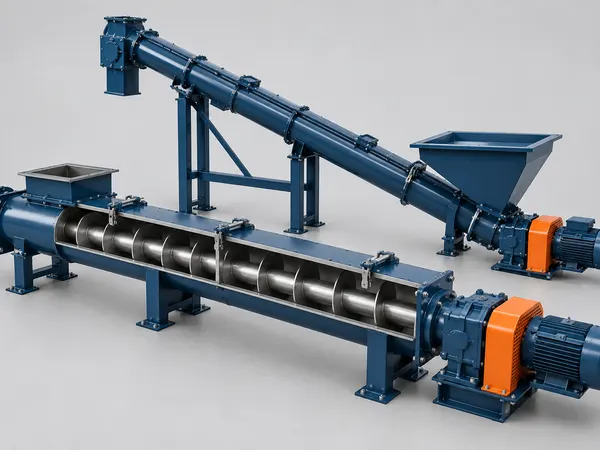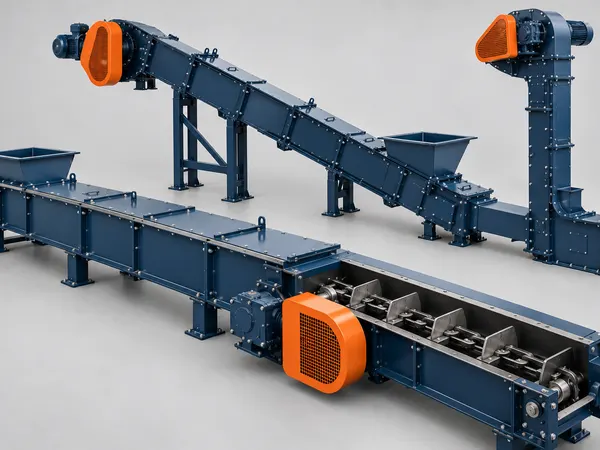
Images are representative illustrations. Products are custom-engineered to your requirement and actual appearance may vary.
Boiler Fuel Feeding System
We engineer and supply Boiler Fuel Feeding System as part of complete industrial heating and utility solutions. Share your capacity, fuel type, application, and site details — our team will recommend a suitable configuration and quote.
Buy Boiler Fuel Feeding System
Built to order and quoted against your duty, so there is no list price. Tell us the capacity, fuel and application by phone or email — we reply within 24 hours.
About Boiler Fuel Feeding System
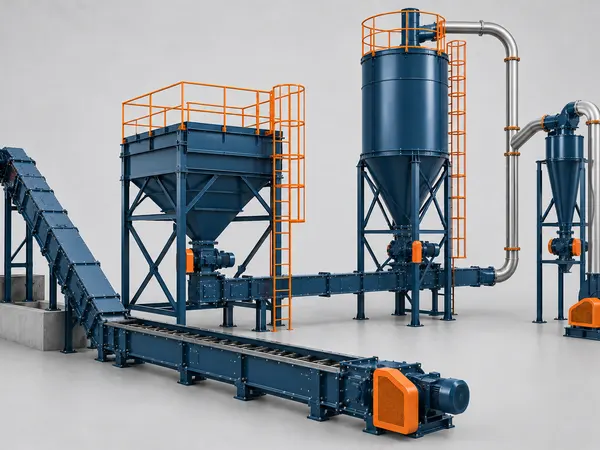
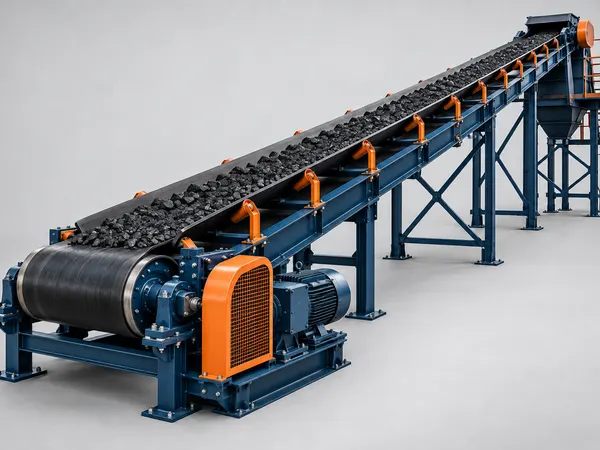
A boiler fuel feeding system is the last stage of fuel handling: the bunker or hopper that holds a working stock of fuel beside the boiler, and the feeders that draw fuel from it and deliver it into the furnace at the rate the boiler is asking for. Whatever reaches the furnace unevenly shows up as swinging steam pressure, smoke and unburnt fuel, so this stage decides how steadily the boiler runs.
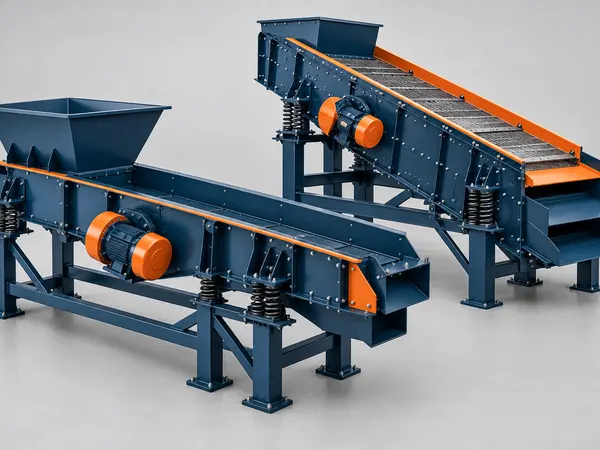
The bunker is sized to carry the boiler through gaps in upstream supply, and it must actually discharge. Biomass and husk bridge over outlets and rat-hole through the middle of a bunker, so the bunker shape, the outlet and the draw-down arrangement — live-bottom screws, agitators or vibrators — matter more than its volume.
Feeders are selected for the fuel and the firing method: screw feeders for husk, sawdust and crushed coal; rotary feeders where an airlock is also needed; ram or reciprocating feeders for bulky biomass; and fuel spreaders for spreader-stoker firing. With a variable-speed drive and a signal from the boiler's pressure control, the feed rate follows the steam demand automatically instead of by hand.
We design and supply fuel feeding systems with new boilers and as retrofits to existing ones, including the bunker, level sensing, feeders, burn-back protection and the controls that tie feeding to boiler load.
Bunker size is a question about the plant, not about the boiler. It is set by how long the boiler must be able to run without anyone refilling it — a shift, a night, a weekend — and then by the volume that quantity of fuel actually occupies. Biomass is the trap here: husk and sawdust take up several times the volume of the same weight of coal, so a bunker sized from a coal figure holds a fraction of the hours the plant expected.
Control is what turns a bunker and a feeder into a feeding system. The feeder runs from the boiler’s steam pressure signal through a variable-speed drive, with minimum and maximum limits so that the fire is never starved or smothered, and it is interlocked with the combustion air so that fuel and air move together rather than independently. Where the plant runs more than one fuel, the limits and the response are set for each, because husk and coal do not burn at the same rate.
Safety sits on the same path the fuel takes. Burn-back protection — an airlock, a flap, a rotary valve or a quench, depending on the fuel and feeder — keeps fire from travelling up the feed line into the bunker; level sensing warns before the bunker runs empty and the fire is lost; and the feeder is interlocked to stop with the boiler rather than continuing to charge a furnace that is no longer drawing.
Typical duty is a husk, wood chip or briquette fired boiler in a rice mill, textile plant, chemical works or food factory, and the most common project of all is converting a hand-charged boiler to automatic feeding. We supply the bunker, draw-down, feeders, burn-back protection, level sensing and controls, with erection, commissioning, operator training and an AMC where the plant wants one.
Boiler Fuel Feeding System Key Features
- Fuel bunker or day hopper sized for the boiler's working stock
- Anti-bridging draw-down: live-bottom screws, agitators or vibrators
- Screw, rotary, ram or spreader feeders to suit the fuel
- Variable-speed feeding linked to boiler pressure control
- Bunker level sensing and low-level alarms
- Burn-back protection between furnace and bunker
- PLC-based automatic feeding in place of manual charging
- Retrofit to existing boilers
- Bunker volume sized on the fuel’s bulk density, not on tonnes
- Minimum and maximum feed limits so the fire is never starved or smothered
- Feeder interlocked with combustion air and with the boiler
- Separate settings per fuel on multi-fuel boilers
- Rotary airlock at the furnace end where the fuel needs one
- Feed trend and run-hour logging on the control panel
- Access, clean-out and inspection points on the bunker
Boiler Fuel Feeding System Specification
Fuels Fed
Feeding Technology
Metered screw under the bunker, suited to husk, sawdust and crushed coal, with variable speed for load-following.
Rotary valve that meters fuel and acts as an airlock between bunker and furnace.
Hydraulic ram pushes bulky or fibrous biomass that a screw would not handle into the furnace.
Moving floor screws or agitators draw fuel from the whole bunker base, preventing bridging and rat-holing.
Throws fuel across the grate rather than dropping it in one place, so a spreader-stoker boiler burns evenly over its whole grate area.
Boiler Fuel Feeding System Applications
Industries Served
Advantages of a Boiler Fuel Feeding System
Fuel arriving at a controlled rate keeps combustion and steam pressure steady.
The feed rate follows the boiler pressure signal automatically rather than relying on manual charging.
Anti-bridging draw-down keeps difficult biomass flowing to the feeders.
Burn-back protection and level alarms guard the link between bunker and furnace.
A bunker holding a shift’s fuel and an automatic feeder replace continuous hand charging, and free the operator to run the boiler rather than shovel for it.
Fuel arriving evenly and in step with air burns more completely than fuel thrown in by the shovelful, which shows in the unburnt carbon in the ash.
The bunker is worked out from the bulk density of the fuel you actually burn, so the hours of storage you asked for are the hours you get.
Optional Accessories
Frequently Asked Questions(10)
What is a boiler fuel feeding system?
Why does biomass stop flowing out of a bunker?
Can an existing manually fed boiler be converted to automatic feeding?
What is burn-back protection?
How big should the fuel bunker be?
How does the feeder know how much fuel the boiler needs?
Can one system feed more than one fuel?
What does converting a manually fed boiler involve?
What routine attention does a feeding system need?
Is the feeding system supplied with the boiler or separately?
- Capacity / size requirements
- Process or application details
- Material preference (M.S / S.S where applicable)
- Installation location & delivery timeline
Share your capacity, fuel type, and application — we respond within 24 hours.
After it is installed
Equipment is the start of the relationship, not the end of it. We work from Indore, Madhya Pradesh, for plants across India, and handle installation and commissioning, boiler AMC, retrofits, plant audits, spare parts and operator training — on equipment from any manufacturer, not only our own.
Related products
View more