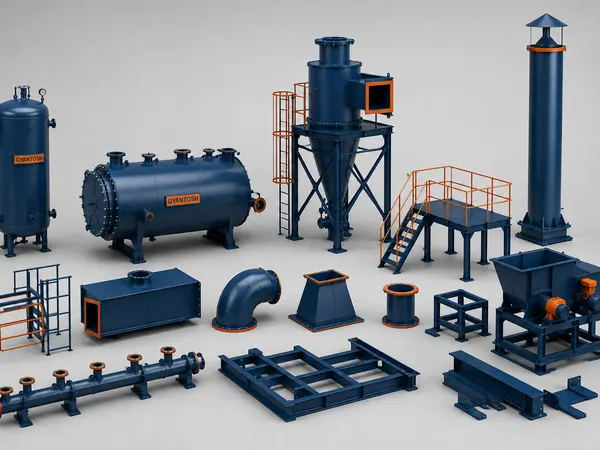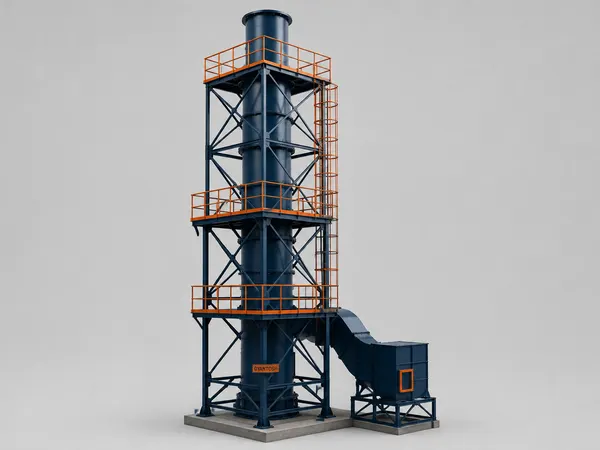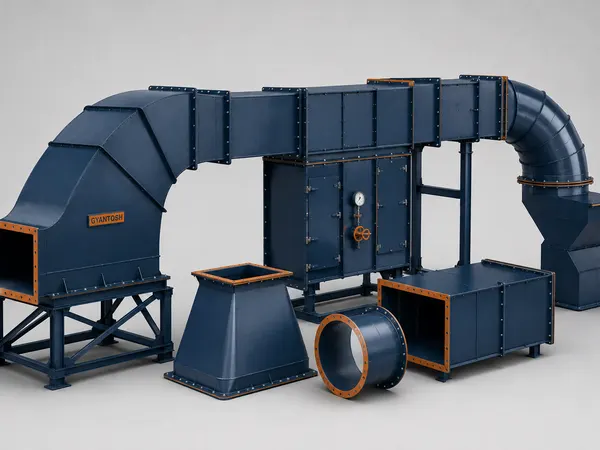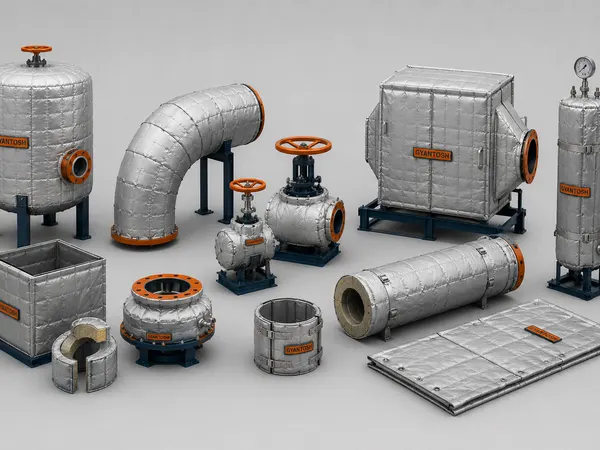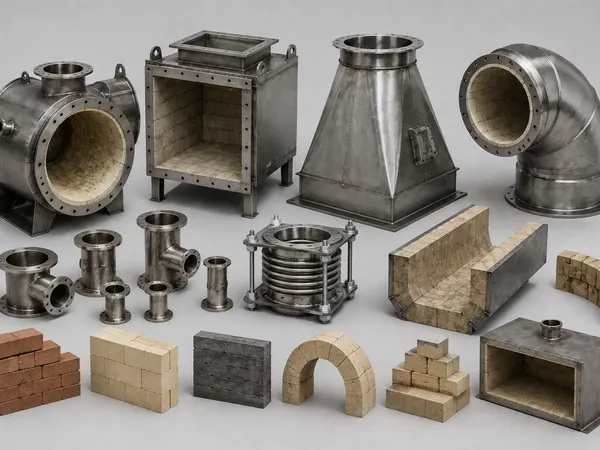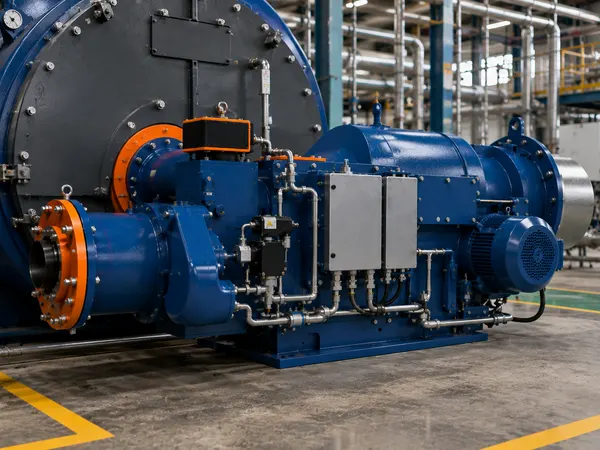
Images are representative illustrations. Products are custom-engineered to your requirement and actual appearance may vary.
IBR, NIBR & Pipeline
We engineer and supply IBR, NIBR & Pipeline as part of complete industrial heating and utility solutions. Share your capacity, fuel type, application, and site details — our team will recommend a suitable configuration and quote.
Get a Quote for IBR, NIBR & Pipeline
Quoted against your scope, so there is no list price. Tell us the site, what the work covers and your timeline by phone or email — we reply within 24 hours.
About IBR, NIBR & Pipeline
GyanTosh designs, fabricates and erects steam, feedwater, condensate and blowdown pipework for boiler houses and process plants — both IBR pipework, which falls under the Indian Boiler Regulations, and non-IBR lines that sit outside that scope. The distinction is not a matter of preference: above the governing pressure and bore, steam and feed pipework is statutory, and it has to be built and documented accordingly before the installation can be registered.
What that means in practice is that the pipe is the smallest part of the job. IBR pipework requires material with certification traceable to the heat it was rolled from, welding procedures and welders qualified for those procedures, stage inspection while the joints are still accessible, and hydraulic testing witnessed and recorded. A line that is welded first and documented afterwards cannot be retro-certified, which is the single most expensive mistake available on this scope.
Route and support design matter as much as the joints. Steam mains have to be laid to fall in the direction of flow with drain points where condensate will collect, sized for a sensible velocity rather than the smallest pipe that fits, and supported so that thermal expansion is absorbed by the arrangement instead of by the flanges. Cold-drawn spring hangers, anchors, guides and expansion loops are what stop a hot line from pulling itself apart.
We take the scope from routing and isometrics through fabrication, erection, testing and documentation, on new installations and on modifications to existing plant.
IBR, NIBR & Pipeline Key Features
- IBR and non-IBR steam, feedwater, condensate and blowdown pipework
- Material traceability and test certificates for statutory scope
- Qualified welding procedures and welder performance records
- Stage inspection and witnessed hydraulic testing
- Route, gradient and drain-point design for wet-steam-free distribution
- Expansion loops, anchors, guides and spring supports
- Insulation and cladding available as part of the same scope
IBR, NIBR & Pipeline Specification
Scope of Work
Line routing, gradients, drain and vent points, and isometric drawings issued for approval before any material is cut.
Shop fabrication of spools to approved drawings, using certified material with traceable test certificates where the line falls under statutory scope.
Site erection with anchors, guides, spring hangers and expansion arrangements sized to absorb thermal movement.
Hydraulic testing, stage inspection and the certification package required for registration of statutory pipework.
IBR, NIBR & Pipeline Applications
Advantages of IBR, NIBR & Pipeline
Certified material, qualified procedures, stage inspection and witnessed testing — assembled as the job proceeds rather than reconstructed afterwards, because IBR pipework cannot be certified retrospectively.
Velocity, pressure drop, gradient and drainage are set for the duty, so the process receives dry steam at the pressure it was promised instead of whatever survives the run.
Hot lines move. Anchors, guides and expansion arrangements are designed in, rather than left for the flanges and the equipment nozzles to absorb.
Routing, fabrication, erection, testing and documentation sit with one party, which removes the interface where piping problems usually surface at commissioning.
Optional Accessories
Frequently Asked Questions(4)
What decides whether my pipework is IBR or non-IBR?
Can IBR pipework be certified after it has been welded?
Do you work on existing plant, or only new installations?
Is insulation included?
- Capacity / size requirements
- Process or application details
- Material preference (M.S / S.S where applicable)
- Installation location & delivery timeline
Share your capacity, fuel type, and application — we respond within 24 hours.
After it is installed
Equipment is the start of the relationship, not the end of it. We work from Indore, Madhya Pradesh, for plants across India, and handle installation and commissioning, boiler AMC, retrofits, plant audits, spare parts and operator training — on equipment from any manufacturer, not only our own.
Related products
View more