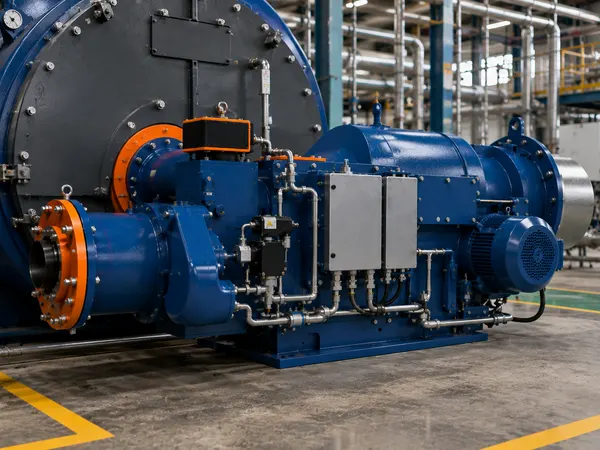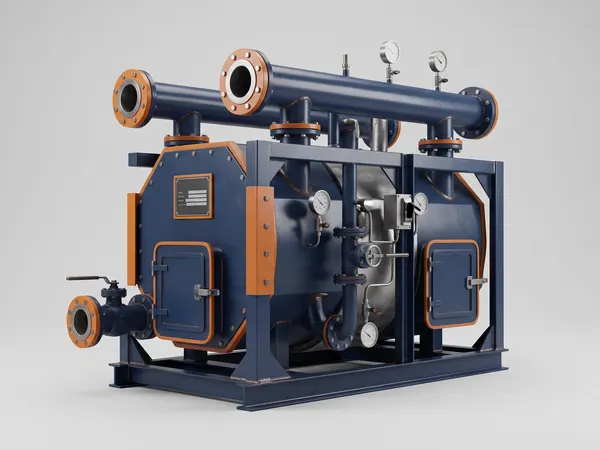
Images are representative illustrations. Products are custom-engineered to your requirement and actual appearance may vary.
Refractory Work
We engineer and supply Refractory Work as part of complete industrial heating and utility solutions. Share your capacity, fuel type, application, and site details — our team will recommend a suitable configuration and quote.
Get a Quote for Refractory Work
Quoted against your scope, so there is no list price. Tell us the site, what the work covers and your timeline by phone or email — we reply within 24 hours.
About Refractory Work
Refractory is what stands between the fire and the steel. In a furnace, combustion chamber or duct where gas temperature would destroy the structure behind it, the lining absorbs that heat, holds its shape and keeps the shell within the temperature it was designed for. Where a boiler is fired on solid fuel, the refractory also shapes the combustion space and holds heat in the furnace, which is part of how the fuel burns out completely rather than leaving unburnt carbon in the ash.
GyanTosh executes refractory lining for boiler furnaces, thermic fluid heaters, hot air generators, incinerators, ducts and stacks. Material follows the duty: castables where the shape is complex or the surface takes impact, insulating firebrick where the priority is to keep heat in, ceramic fiber where the lining has to be light and heat quickly, and dense abrasion-resistant grades where fuel or ash moves against the surface.
The part that decides how long a lining lasts is not the material but the installation. Anchors have to be the right type and spacing for the material and the orientation, castable has to be mixed with the correct water and placed without segregating, and — most importantly — the dry-out and first heat-up have to follow a controlled schedule. Free water trapped in a lining that is fired too fast turns to steam inside the material and spalls it away from the inside. A lining rushed into service in a day can fail in a month.
Refractory Work Key Features
- Furnace, combustion chamber, duct and stack lining
- Castable, insulating firebrick, ceramic fiber and dense abrasion-resistant grades
- Anchor selection and spacing appropriate to material and orientation
- Controlled dry-out and heat-up schedules
- Repair and patch work on existing linings
- Complete relining during planned shutdowns
Refractory Work Specification
Scope of Work
Chosen against gas temperature, whether the surface takes abrasion or impact, and whether the priority is holding heat in or protecting the shell.
Anchor type, material and spacing matched to the lining and its orientation — an overhead lining fails differently from a wall, and is anchored differently.
Casting, gunning or bricklaying as the application requires, with mixing and placement controlled so the material achieves the properties it was specified for.
A controlled schedule that drives free and chemically combined water out gradually. This step is where most premature lining failures are actually caused.
Refractory Work Applications
Advantages of Refractory Work
Anchoring, mixing, placement and dry-out matter more to how long a lining lasts than the grade written on the bag. A correctly specified material installed badly fails early.
Free water driven out too quickly turns to steam inside the lining and spalls it from within. A proper heat-up schedule costs a day or two and is the difference between years of service and months.
Abrasion, impact, thermal shock and heat retention pull towards different materials. The lining is specified against what the furnace actually does rather than to a single default.
Relining happens in a window that is never long enough. Scope is planned around the outage available, with preparation done before the plant comes down.
Optional Accessories
Frequently Asked Questions(4)
Why does a new refractory lining fail early?
Can refractory be patched, or does it need full replacement?
How do I know the lining is failing?
Do you work within a planned shutdown?
- Capacity / size requirements
- Process or application details
- Material preference (M.S / S.S where applicable)
- Installation location & delivery timeline
Share your capacity, fuel type, and application — we respond within 24 hours.
After it is installed
Equipment is the start of the relationship, not the end of it. We work from Indore, Madhya Pradesh, for plants across India, and handle installation and commissioning, boiler AMC, retrofits, plant audits, spare parts and operator training — on equipment from any manufacturer, not only our own.
Related products
View more