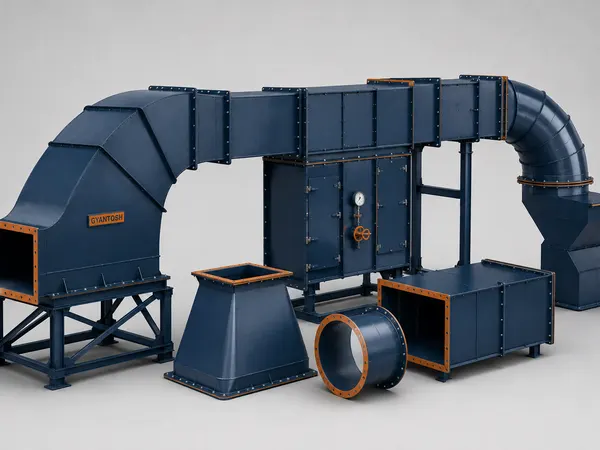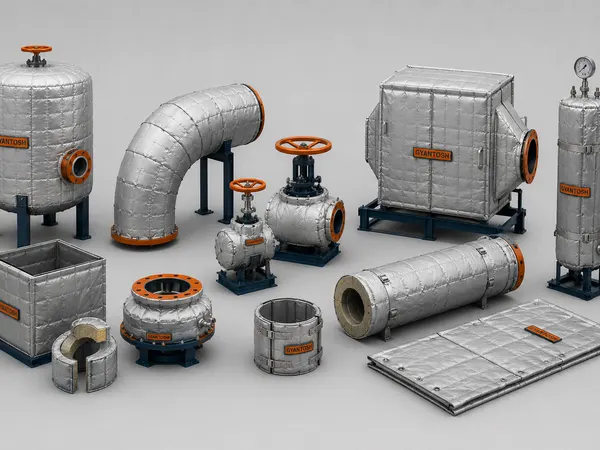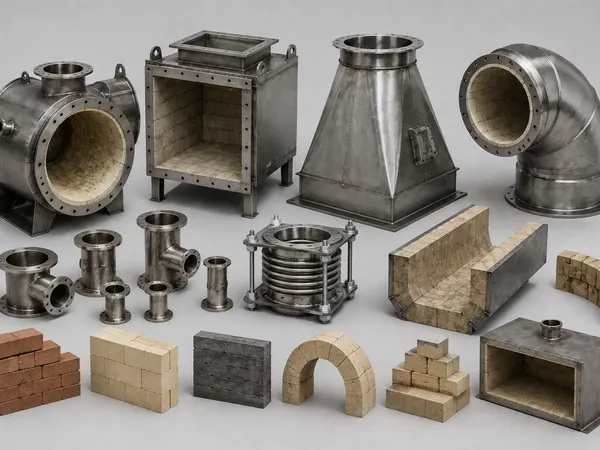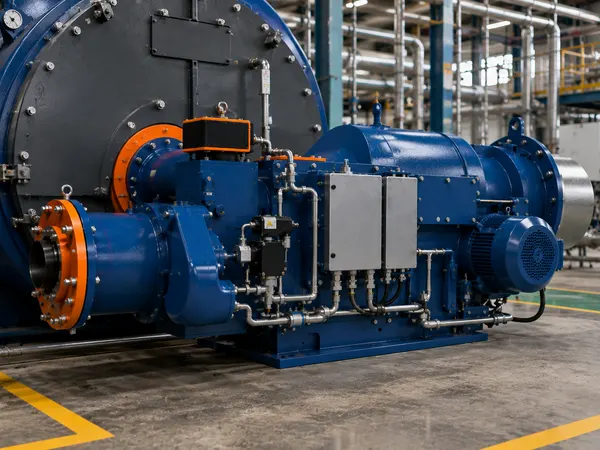
Images are representative illustrations. Products are custom-engineered to your requirement and actual appearance may vary.
Chimney Fabrication
We engineer and supply Chimney Fabrication as part of complete industrial heating and utility solutions. Share your capacity, fuel type, application, and site details — our team will recommend a suitable configuration and quote.
Get a Quote for Chimney Fabrication
Quoted against your scope, so there is no list price. Tell us the site, what the work covers and your timeline by phone or email — we reply within 24 hours.
About Chimney Fabrication
A chimney does two jobs at once: it discharges flue gas high enough and fast enough to disperse properly, and it provides part of the draft the boiler needs to breathe. Height is not an aesthetic decision — it is set by the emission requirements in your consent to operate, and getting it wrong is a compliance problem rather than a performance one.
GyanTosh, based in Indore, fabricates and erects self-supporting and guyed steel chimneys for boilers, thermic fluid heaters, hot air generators and process furnaces. The structural design has to carry its own weight and the wind loading at that height, which is what drives plate thickness, base diameter and foundation loads. Where the gas is hot or carries acidic condensate, the shell is lined or specified in a grade that will survive it, because a chimney that corrodes from the inside gives no warning before it becomes unsafe.
The scope includes the parts that are easy to leave out of a quotation and difficult to add later: sampling ports positioned where the pollution board expects to take a reading, access for that sampling, aviation warning paint and lighting where the height requires it, lightning protection, rain caps, drains for condensate, and the expansion arrangement where the flue duct meets the shell.
Chimney Fabrication Key Features
- Self-supporting and guyed steel chimney construction
- Height set by the emission and dispersion requirement
- Structural design for self weight and wind loading
- Lining or material grade selected for gas temperature and acidity
- Sampling ports and sampling access platforms
- Aviation warning marking and lightning protection where required
- Condensate drains and rain protection
Chimney Fabrication Specification
Scope of Work
Diameter set by gas volume and exit velocity, height by the dispersion requirement in the consent to operate — the two are decided together, not in sequence.
Shell thickness, base diameter, stiffeners and foundation loading calculated for self weight and wind at the required height.
Shop fabrication in sections with site assembly and erection, including anchor bolt setting and alignment.
Sampling ports and access, aviation marking, lightning protection and drainage — the items a pollution board inspection expects to find.
Chimney Fabrication Applications
Advantages of Chimney Fabrication
Sized against the dispersion and emission requirement in your consent rather than to a rule of thumb, so the installation passes inspection the first time.
Wind loading governs a tall slender structure. Shell thickness, stiffening and foundation loads are calculated for it rather than assumed.
Where gas is cool enough for acidic condensate to form, lining or material grade is specified accordingly — internal corrosion is invisible until it is structural.
Sampling ports, access, aviation marking and lightning protection are in the scope, not discovered as extras during the pollution board visit.
Optional Accessories
Frequently Asked Questions(4)
How is chimney height decided?
Self-supporting or guyed — which do I need?
Does the chimney need lining?
Can you replace an existing chimney?
- Capacity / size requirements
- Process or application details
- Material preference (M.S / S.S where applicable)
- Installation location & delivery timeline
Share your capacity, fuel type, and application — we respond within 24 hours.
After it is installed
Equipment is the start of the relationship, not the end of it. We work from Indore, Madhya Pradesh, for plants across India, and handle installation and commissioning, boiler AMC, retrofits, plant audits, spare parts and operator training — on equipment from any manufacturer, not only our own.
Related products
View more