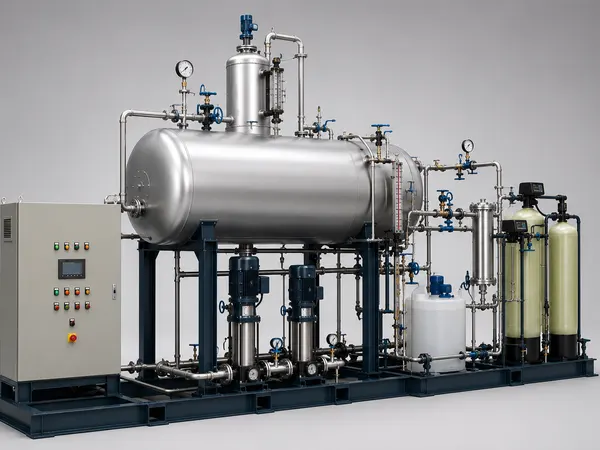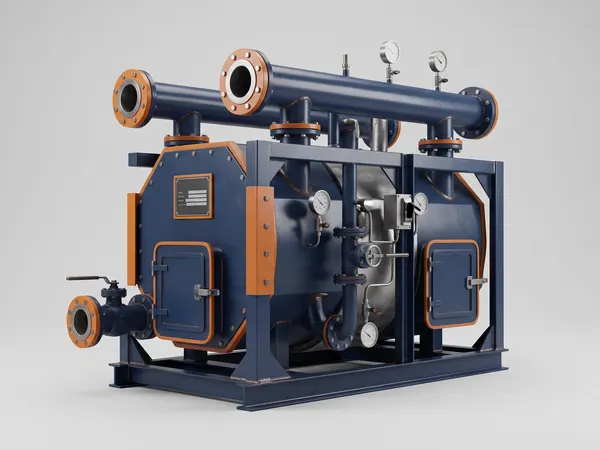
Images are representative illustrations. Products are custom-engineered to your requirement and actual appearance may vary.
Ducting
We engineer and supply Ducting as part of complete industrial heating and utility solutions. Share your capacity, fuel type, application, and site details — our team will recommend a suitable configuration and quote.
Get a Quote for Ducting
Quoted against your scope, so there is no list price. Tell us the site, what the work covers and your timeline by phone or email — we reply within 24 hours.
About Ducting
Ducting carries air to the furnace and flue gas away from it, and the difference between good and bad ducting is measured in fan power for the life of the plant. Every bend, transition and badly placed damper adds pressure drop that the ID or FD fan has to overcome, and that pressure drop is paid for in electricity every hour the boiler runs.
GyanTosh fabricates and erects flue gas and combustion air ducting for boilers, thermic fluid heaters, hot air generators and emission control equipment. Sizing is a balance: too large and the gas velocity drops far enough for dust to settle out inside the duct, too small and the pressure drop and the erosion both climb. Where the gas carries abrasive ash, the vulnerable faces — the outside of bends in particular — are where wear concentrates and where thickness or lining is added.
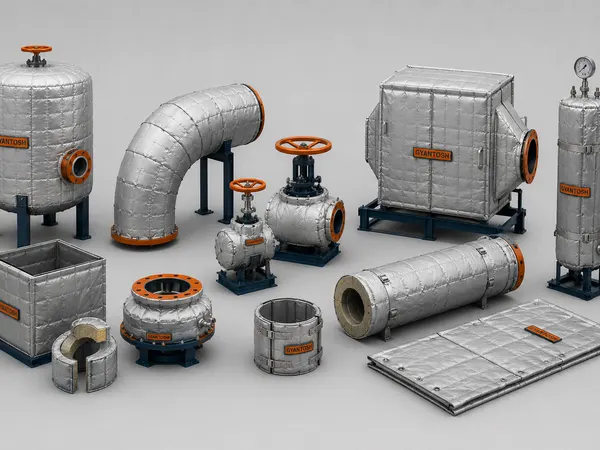
Hot ducting moves as it heats, and a run that is rigidly fixed at both ends will tear itself or its connections apart. Expansion joints, sliding supports and guides are designed in to absorb that movement. The scope also covers dampers and their operating arrangements, access and inspection doors, drains where condensate can collect, and the insulation and cladding that stop the run from radiating purchased heat into the boiler house.
Ducting Key Features
- Flue gas and combustion air ducting, shop fabricated and site erected
- Sized on velocity and pressure drop for the gas duty
- Expansion joints, sliding supports and guides for thermal movement
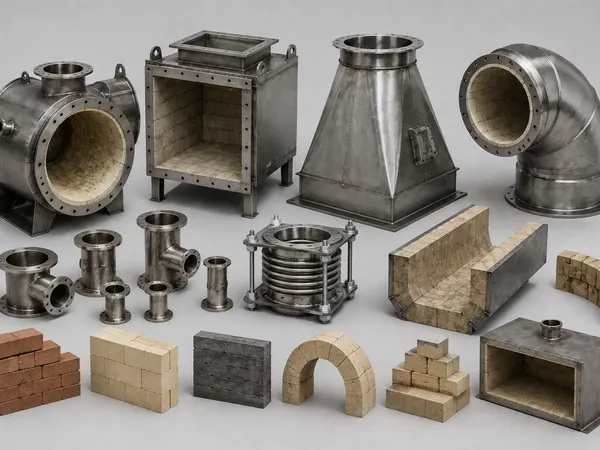
- Reinforced or lined sections where abrasive ash concentrates wear
- Isolation, control and diverter dampers with operating arrangements
- Access and inspection doors, condensate drains
- Insulation and cladding available in the same scope
Ducting Specification
Scope of Work
Cross-section set by gas volume and a velocity that neither drops dust nor erodes the duct, with routing chosen to minimize bends and the pressure drop they add.
Shop fabrication of duct sections, bends, transitions and stiffening, with thickness or lining increased where wear is concentrated.
Expansion joints, sliding supports and guides positioned so a hot run expands into the arrangement rather than into its connections.
Isolation, control and diverter dampers with their operating arrangements, plus inspection doors and drains where they will actually be needed.
Ducting Applications
Advantages of Ducting
Pressure drop is an operating cost paid every hour the plant runs. Routing and cross-section are chosen to keep it down rather than to take the shortest path through the available space.
Fast enough that dust stays entrained, slow enough that abrasive ash does not eat the bends. Both failure modes are common and both are avoidable at the design stage.
Joints, sliding supports and guides let a hot duct move. Without them the movement is absorbed by whatever is bolted to the ends, which is usually the fan or the equipment nozzle.
Additional thickness or lining goes where the ash actually concentrates — outer radii of bends and impingement points — instead of uniformly, which is cheaper and lasts longer.
Optional Accessories
Frequently Asked Questions(4)
Why does duct sizing matter if the fan can handle it?
What causes ducting to wear through?
Do hot ducts really need expansion joints?
Can ducting be modified on a running plant?
- Capacity / size requirements
- Process or application details
- Material preference (M.S / S.S where applicable)
- Installation location & delivery timeline
Share your capacity, fuel type, and application — we respond within 24 hours.
After it is installed
Equipment is the start of the relationship, not the end of it. We work from Indore, Madhya Pradesh, for plants across India, and handle installation and commissioning, boiler AMC, retrofits, plant audits, spare parts and operator training — on equipment from any manufacturer, not only our own.
Related products
View more