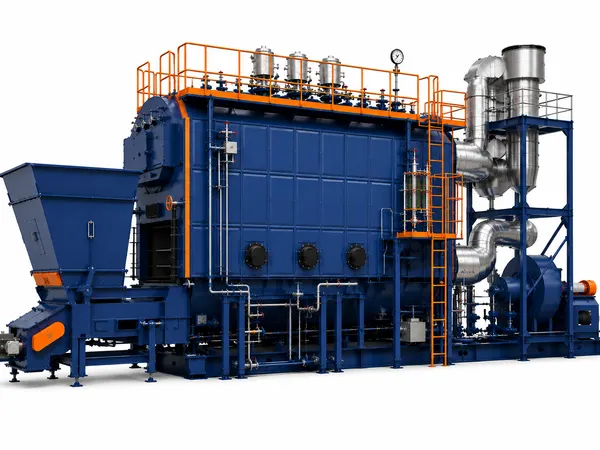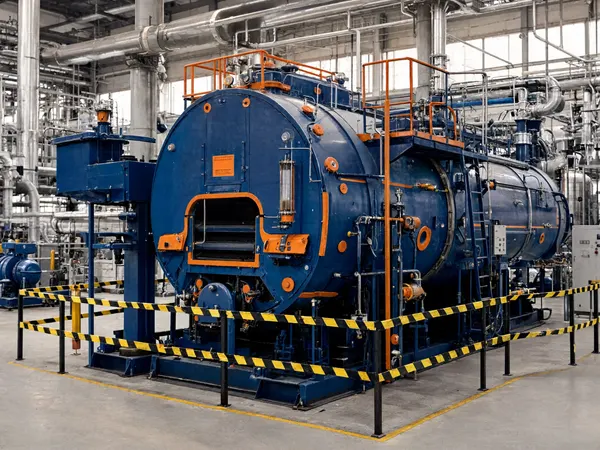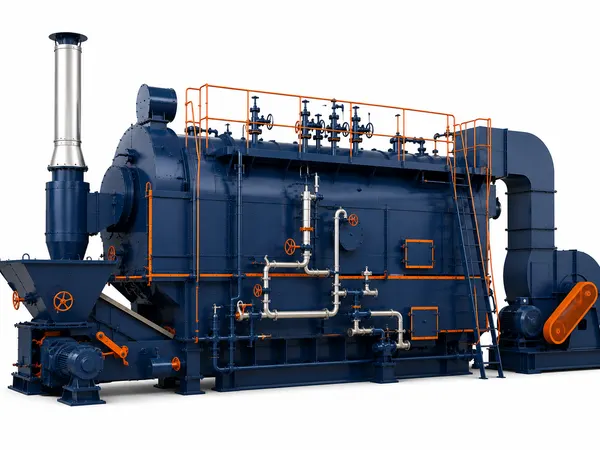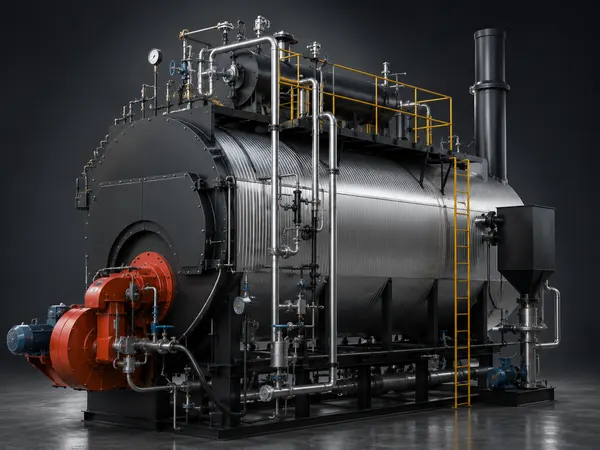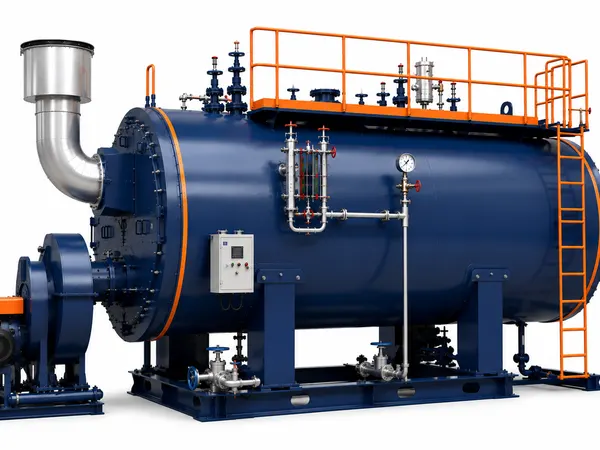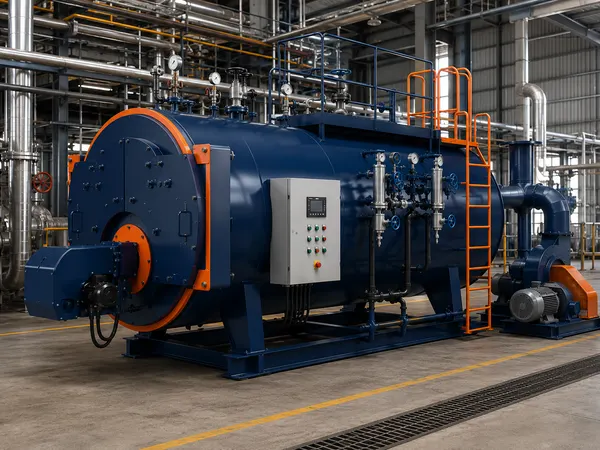
Images are representative illustrations. Products are custom-engineered to your requirement and actual appearance may vary.
AFBC Boiler — Atmospheric Fluidized Bed Combustion
We engineer and supply AFBC Steam Boiler as part of complete industrial heating and utility solutions. Share your capacity, fuel type, application, and site details — our team will recommend a suitable configuration and quote.
Buy AFBC Steam Boiler
Built to order and quoted against your duty, so there is no list price. Tell us the capacity, fuel and application by phone or email — we reply within 24 hours.
About AFBC Steam Boiler
GyanTosh's AFBC (Atmospheric Fluidized Bed Combustion) Steam Boilers are engineered for high-efficiency, fuel-flexible steam generation across medium and large process and captive-power applications. In a fluidized bed, combustion air is forced upward through a bed of inert material (sand) and fuel, suspending the particles so they behave like a boiling liquid — creating turbulent mixing, uniform bed temperature, and exceptionally complete combustion.
Because combustion takes place at a controlled, relatively low bed temperature (typically 850–900°C), AFBC boilers burn a remarkably wide range of low-grade and high-ash fuels — coal, lignite, washery rejects, petcoke, dolochar, and rice husk — while consistently achieving combustion efficiency in excess of 85%, largely independent of the fuel's ash content. In-bed limestone dosing further allows a significant portion of SO₂ to be captured within the furnace itself.
Every AFBC boiler is designed and manufactured in compliance with IBR 1950 and IS 2825, using certified boiler-quality pressure parts, robust bed coils, and wear-resistant refractory. Fire-tube, water-tube, and coil-type configurations are offered to match the required steam parameters and duty cycle.
Available in capacities up to 175 TPH and working pressures up to 130 kg/cm², GyanTosh AFBC boilers suit sugar mills, distilleries, chemical plants, paper mills, and captive power plants that need dependable steam from economical, difficult, or variable-quality solid fuels. Backed by over two decades of boiler engineering experience.
AFBC Steam Boiler Key Features
- Fluidized bed combustion for uniform bed temperature and near-complete burnout
- Over 85% combustion efficiency largely independent of fuel ash content
- Exceptional fuel flexibility — coal, lignite, petcoke, washery rejects, dolochar, husk
- Low bed temperature (850–900°C) minimizing clinker formation and NOₓ
- In-bed limestone dosing for partial SO₂ capture within the furnace
- High capacities up to 175 TPH for captive power and large process plants
- Robust in-bed and freeboard heat transfer surfaces for high steam parameters
- Designed for continuous 24×7 base-load operation
- Compliant with IBR 1950 and IS 2825 pressure vessel codes
- Wear-resistant refractory and abrasion-protected pressure parts
- Efficient turndown and stable combustion under fluctuating load
- Compatible with economizer, air preheater, and modern APC equipment
AFBC Steam Boiler Specification
Fuels Used
Combustion Technology
Combustion air is forced through a bed of inert sand and fuel, fluidizing the particles for intense mixing, uniform temperature, and complete combustion of even low-grade fuels.
The bed is maintained at 850–900°C — high enough for efficient combustion, low enough to minimize clinkering, ash fusion, and thermal NOₓ formation.
Limestone dosed into the bed reacts with sulfur dioxide, capturing a significant fraction of SO₂ within the furnace and reducing downstream scrubbing load.
Fuel feeding systems matched to particle size and fuel type ensure even bed distribution and stable combustion across the operating range.
Primary fluidizing air and secondary freeboard air are balanced to complete combustion of volatiles while controlling emissions.
AFBC Steam Boiler Applications
Industries Served
Advantages of an AFBC Steam Boiler
AFBC technology efficiently fires coal, lignite, petcoke, washery rejects, and dolochar that conventional boilers cannot burn economically, opening access to the cheapest available fuels.
Intense bed mixing ensures over 85% combustion efficiency even as fuel quality varies, delivering predictable steam output from inconsistent fuel supply.
Low bed temperature suppresses thermal NOₓ, while in-bed limestone dosing captures SO₂ at source — easing compliance with pollution control norms.
Configurations up to 175 TPH and 130 kg/cm² make AFBC ideal for captive power and large cogeneration duties.
Operating below ash fusion temperature minimizes clinker formation and bed agglomeration, improving availability and reducing downtime.
The ability to run on the lowest-cost solid fuels available locally significantly reduces the cost of steam and power generation over the plant life.
Optional Accessories
Frequently Asked Questions(12)
What does AFBC stand for?
What fuels can an AFBC boiler burn?
Why is AFBC efficiency independent of ash content?
How does AFBC reduce SO₂ emissions?
What capacity range is available?
Is IBR certification provided?
Why does AFBC produce less clinker?
Is AFBC suitable for captive power plants?
Can GyanTosh supply the complete boiler island?
What is the AFBC boiler working principle?
What AFBC boiler efficiency is realistic?
What are the main AFBC boiler design considerations?
- Capacity / size requirements
- Process or application details
- Material preference (M.S / S.S where applicable)
- Installation location & delivery timeline
Share your capacity, fuel type, and application — we respond within 24 hours.
After it is installed
Equipment is the start of the relationship, not the end of it. We work from Indore, Madhya Pradesh, for plants across India, and handle installation and commissioning, boiler AMC, retrofits, plant audits, spare parts and operator training — on equipment from any manufacturer, not only our own.