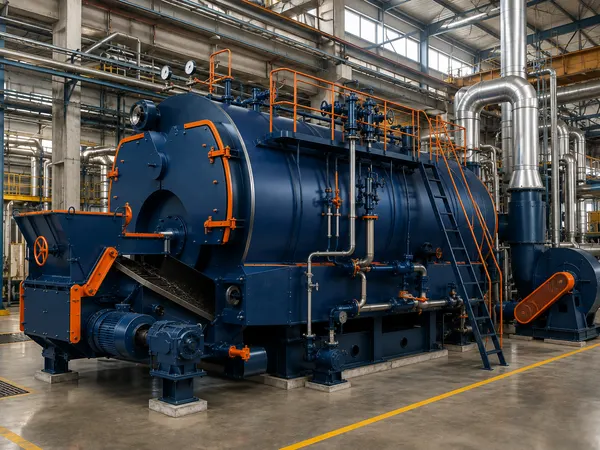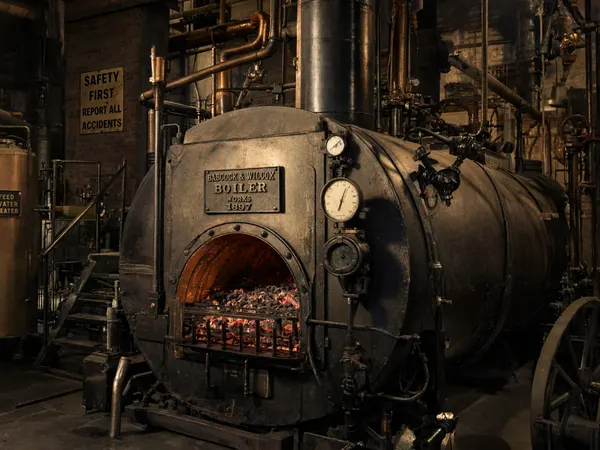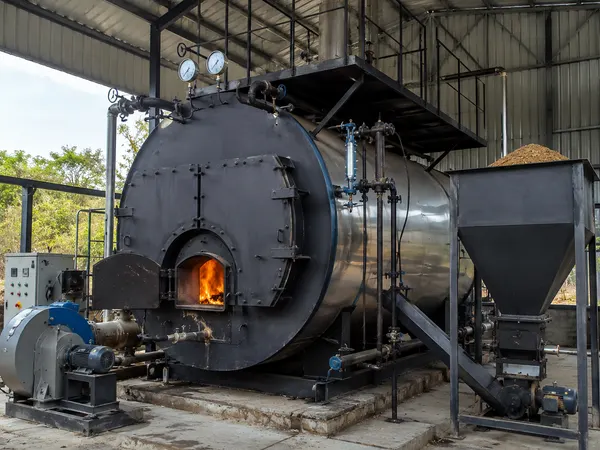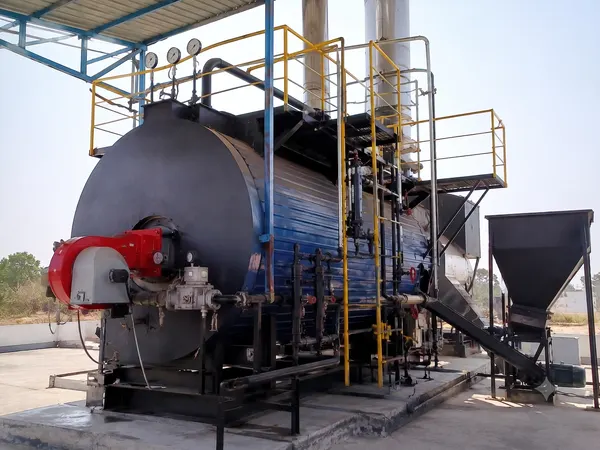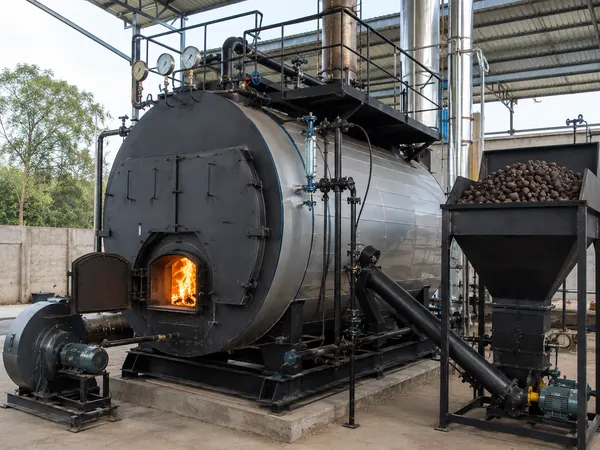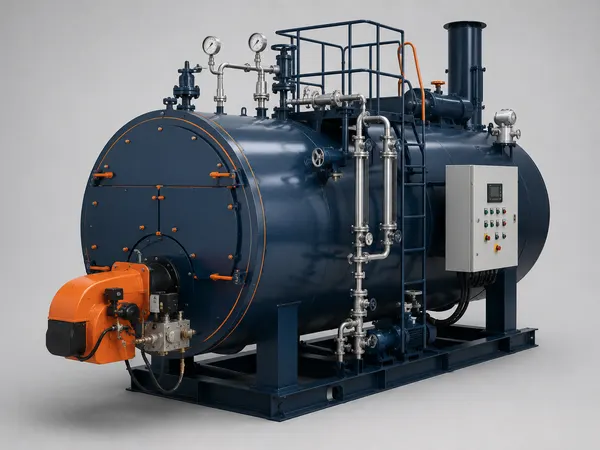
Images are representative illustrations. Products are custom-engineered to your requirement and actual appearance may vary.
WHRB Boiler — Waste Heat Recovery Boiler
We engineer and supply Waste Heat Recovery Boiler as part of complete industrial heating and utility solutions. Share your capacity, fuel type, application, and site details — our team will recommend a suitable configuration and quote.
Buy Waste Heat Recovery Boiler
Built to order and quoted against your duty, so there is no list price. Tell us the capacity, fuel and application by phone or email — we reply within 24 hours.
About Waste Heat Recovery Boiler
GyanTosh's Waste Heat Recovery Boilers (WHRB / HRSG) capture the hot exhaust gases from upstream processes — DG-set exhaust, furnaces, kilns, incinerators, and other high-temperature streams — and convert that otherwise-wasted energy into useful steam. This dramatically cuts fuel cost and emissions, because the steam is generated from heat you have already paid for.
Because a WHRB uses no primary fuel of its own, it is one of the most cost-effective and sustainable ways to raise plant energy efficiency. Modular, compact designs are engineered around the available waste-heat quantity, gas temperature, and required steam parameters — suiting both new plants and modernization/retrofit of existing installations.
Every waste heat recovery boiler is designed and manufactured in compliance with IBR 1950 and IS 2825 using certified boiler-quality pressure parts, with heat transfer surfaces and gas-path design tailored to the source gas characteristics. An integral economizer further improves heat recovery.
Steam capacity and pressure are set by the available waste heat and process requirement. GyanTosh WHRBs serve fertilizer, steel, paper, cement, glass, chemical, refinery, and power plants seeking to slash energy cost and carbon footprint. Backed by over two decades of boiler engineering experience.
Waste Heat Recovery Boiler Key Features
- Recovers steam from hot process exhaust — no primary fuel required
- Cuts fuel cost and emissions by reusing already-generated heat
- Suited to DG exhaust, furnaces, kilns, incinerators, and process gases
- Modular, compact design for new plants and retrofits
- Custom-engineered to waste-heat quantity, gas temperature, and steam duty
- HRSG-style heat transfer surfaces tailored to source gas
- Integral economizer for maximum heat recovery
- Improves overall plant thermal efficiency and sustainability
- Designed for continuous 24×7 operation alongside the parent process
- Compliant with IBR 1950 and IS 2825 pressure vessel codes
- Compatible with soot blowing and APC equipment where required
- Fast payback through fuel and emission savings
Waste Heat Recovery Boiler Specification
Waste Heat Source
Heat Recovery Configuration
Heat recovery steam generator surfaces are arranged in the exhaust gas path to extract maximum energy from the waste-gas stream into feed water and steam.
Tube arrangement, gas velocity, and materials are matched to the source gas temperature, dust loading, and corrosiveness for reliable long-term operation.
An economizer preheats feed water using residual gas heat, pushing overall heat recovery and efficiency higher.
A modular design minimizes footprint and back-pressure on the parent process, easing retrofit into existing plants.
Waste Heat Recovery Boiler Applications
Industries Served
Advantages of a Waste Heat Recovery Boiler
A WHRB generates steam from heat that would otherwise be lost, so the steam is effectively free — delivering major operating-cost savings.
Recovering waste heat reduces the fuel burned elsewhere, cutting the plant's overall emissions and carbon footprint.
Fuel and emission savings typically give waste heat recovery boilers an attractive, short payback period.
Modular, compact design allows integration into existing plants with minimal disruption and low back-pressure on the parent process.
Each WHRB is sized precisely to the available waste heat, gas characteristics, and steam requirement for optimum recovery.
Improving energy efficiency through heat recovery supports corporate sustainability and energy-conservation goals.
Optional Accessories
Frequently Asked Questions(10)
What is a waste heat recovery boiler?
How does a WHRB save money?
What heat sources can it use?
What steam capacity can I get?
Can a WHRB be retrofitted to an existing plant?
Is IBR certification provided?
Which industries benefit most?
Can GyanTosh design and install the complete system?
What is the waste heat recovery boiler working principle?
What are the types of waste heat recovery boiler?
- Capacity / size requirements
- Process or application details
- Material preference (M.S / S.S where applicable)
- Installation location & delivery timeline
Share your capacity, fuel type, and application — we respond within 24 hours.
After it is installed
Equipment is the start of the relationship, not the end of it. We work from Indore, Madhya Pradesh, for plants across India, and handle installation and commissioning, boiler AMC, retrofits, plant audits, spare parts and operator training — on equipment from any manufacturer, not only our own.